
Medical Factors for Pilots
Remote pilots are responsible for determining their fitness to fly sUAS. Additionally, anyone acting as a “crewmember,” such as a visual observer, shares the same responsibility. Thus, careful attention to how you and other participants feel and act is necessary to ensure safe sUAS operations. Seemingly small things can create significant hazards when mixed with a fast-moving object with rapidly rotating propeller blades! For example, taking some medicine for your allergies could make you drowsy or dizzy, which may be enough of a distraction to cause you to accidentally do something detrimental. If you have a question in your mind as to how a prescription or over-the-counter drug, or even illness symptoms, may affect your fitness to fly, check with an Aviation Medical Examiner, not your family doctor, to be sure. Prescription analgesics and antihistamines, the very things that we reach for when we have problems, are the most likely to cause problems.
Drugs and Alcohol
The effects of drugs and alcohol on performance cannot be understated. Pilots are prohibited from flying within 8 hours of ingesting any alcoholic beverage and from flying while under the influence of any drug or medication. Even over-the-counter medications as seemingly innocuous as cough suppressants can affect judgment, memory, and alertness. Remote pilots should check with an Aviation Medical Examiner for advice if in doubt about any medication. Remember, you are required to ground yourself (and other crew should as well) if you have any medical condition which affects your abilities as a crewmember (Figure 9-1). Just as a reminder, remote pilots and crew must comply with the same regulations as crewed aircraft pilots, per 14 CFR Part 107; this includes a minimum of 8 hours between drinking and flying as well as a maximum of 0.04 blood alcohol level. Also, if you get busted or refuse to submit to testing, your future application for certificates can be denied, or your current certificate revoked or suspended.
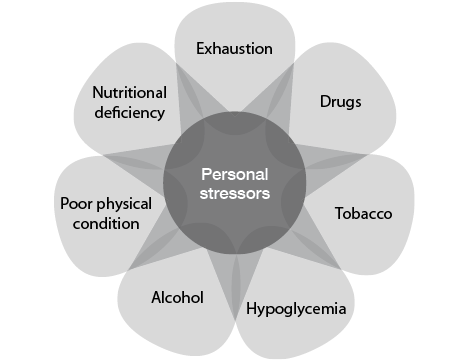
Figure 9-1. Personal stress can be caused by many factors that could affect a pilot’s fitness to safely fly an sUAS.
Toxic Fumes
Don’t fly immediately after using adhesives, solvents, or cleaners that leave fumes in or around the sUAS. Use caution when fueling the sUAS (for those that use fuel) to avoid unnecessary exposure to harmful fumes. This should be common sense, but it is sometimes overlooked in the rush to get the mission started.
Visual Illusions
As a remote pilot, you will rely on your eyes to keep you out of trouble—but under certain conditions, your eyes can lie. Here are a few subtle traps to watch out for:
Autokinesis: In low-light conditions, if you stare at a fixed light, it will appear to move. It might even lead you to believe it is a star (or a UFO). Solution? Don’t stare at a fixed light. Instead look off-center of the light.
Featureless terrain illusion: This one gets you when flying over water or desert, with no structures or vegetation to help with depth perception. The terrain background, such as trees of different sizes, colors, and shapes, may also make it difficult to see an sUAS or be able to determine its orientation/direction.
Atmospheric illusions: Fog and haze will make you think that your sUAS is farther away than it really is. It will also make potentially conflicting aircraft seem farther away than they actually are.
Ground lighting illusions: Pilots have mistaken lights on roads and trains for runway lights. Check the Chart Supplement to see what kind of approach lighting is installed, and check the sectional to see what nearby non-aviation activity might be confusing.
Disorientation: The farther away an sUAS gets from those operating it, the harder it can be to determine the features of the aircraft that provide clues about its orientation, heading, altitude, and speed. Before assuming a specific sUAS attitude or positioning, verify these by making small control inputs to confirm that the actual aircraft alignment is as anticipated. Rapid degradation of control can occur if care is not taken in times of disorientation.
Spatial disorientation: Spatial disorientation specifically refers to the lack of orientation with regard to the position, attitude, or movement of the airplane in space. It is a state of temporary confusion resulting from misleading information being sent to the brain by various sensory organs. The best way to overcome spatial disorientation is with training and by trusting the instruments and controls and disregarding the sensory perceptions.
Concerns While Out in the Elements
Unlike crewed aircraft pilots, remote pilots work outside in Mother Nature and must directly deal with the elements. Thus, pre-planning should be undertaken to guarantee safe and comfortable operations. When preparing, think of what you would need if you were spending the day at a location similar to where you plan to operate. For example, if you are going to be up in the mountains, plan as though you were going for a hike in similar conditions and terrain. You will want proper protection from the environment in case the weather becomes unfavorable as well as any special equipment required to make getting in and out of the area easier (and innocuous). If you are flying at the beach, you will need sunscreen, sunglasses, and comfortable clothes. Also make sure your crew is well informed of what is required so they do not show up in mountain gear for the day at the beach, or vice versa. If going into remote areas, particularly if you are by yourself, be sure to leave information such as your location, plans, and anticipated length of the trip with a friend. Some common sense goes a long way.
In these days when virtually everyone seems to be carrying a bottle of water, it hardly seems necessary to warn anyone about the hazards of dehydration. The old advice about drinking six, eight-ounce glasses of water a day has been discredited, but no one denies that dehydration can cause disorientation and problems with speech. Make sure that you have plenty of liquids available, both for yourself and for other crewmembers. This is particularly important due to the sometimes harsh environments in which sUAS operations can occur (such as deserts) as well as the potentially long durations out in the sun. It is a good idea to pack some snacks, as well. You’d be surprised how much better your brain (and those of your crew) work when well fed and hydrated.
Looking Out for Other Aircraft
Scanning the sky for aircraft is just as important as maintaining control of your sUAS, and deserves equal attention. Do not limit your scan to those areas ahead of and at the same level as your sUAS, but instead scan systematically across the entire horizon, looking both below and above the altitude at which your system is flying. A constant sweep of the eyes will not be effective, because your eyes need time to focus on objects, so momentarily stopping for at least a second will enhance your ability to detect airplanes. A commonly used method is to pick a 10-degree section of the sky (visualizing the entire sky as 360 degrees), and then scan that section up and down before moving on to the next 10-degree section. It can be difficult to do a good job scanning while simultaneously flying an sUAS. Ideally, you will have a visual observer to look out for aircraft, but if not, you will have to divide your attention accordingly to ensure you’re keeping watch for air traffic. If you receive a waiver to fly at night, because of the way your eyes work, you will see only those objects that are slightly out of your direct line of sight, and your scan will have to be slower and more deliberate.
If an airplane remains on the same relative bearing (it is not moving in your field of view, but is getting bigger), this means the aircraft is on a direct intercept course and may be a conflict to your operation. Keeping the right-of-way rules in mind, maneuver your sUAS well clear of the aircraft, or even better, land.
Hazy conditions are particularly challenging for pilots. With nothing specific to focus on, your eyes relax and “coast,” seeking a comfortable focusing distance 10 to 30 feet in the direction of view. You are looking but not seeing. Because of the lack of contrast, terrain and obstacles appear to be farther away than their actual distance. Choose any distant object that presents itself, even the top of a distant object, to keep your eyes working.
Sun-Blindness
Flying directly toward a rising or setting sun can effectively blind you, making it impossible for you to track your sUAS or see obstacles or aircraft. Even a moment spent looking toward the sun can shrink your pupils to the size of BBs, and it will take a while for them to recover. It is best to be prepared with sunglasses, a hat/visor, or both. If possible, try to set up the mission to avoid having to look into the sun, keeping it behind the ground control station. Similar degradation to vision can occur when the sun reflects off of objects such as mirrored glass windows or snow-covered terrain. Whenever possible, the impact of these challenges should be minimized with adequate forethought.
Review Questions
1. A state of temporary confusion resulting from misleading information being sent to the brain by various sensory organs is defined as
A—spatial disorientation.
B—hyperventilation.
C—hypoxia.
2. What is the most effective way to use the eyes during night flight?
A—Look only at far away, dim lights.
B—Scan slowly to permit off-center viewing.
C—Concentrate directly on each object for a few seconds.
3. The danger of spatial disorientation during flight in poor visual conditions may be reduced by
A—shifting the eyes quickly between the sUAS and the ground control station.
B—having faith in the sUAS telemetry rather than relying on the sensory organs.
C—leaning the body when turning the sUAS.
4. What effect does haze have on the ability to see traffic or terrain features during flight?
A—Haze causes the eyes to focus at infinity.
B—Contrasting colors become less distinct, making objects easier to see.
C—All traffic or terrain features appear to be farther away than their actual distance.
5. What is the most effective way to scan for traffic during daytime flight?
A—Focus on the distant horizon.
B—Scan quickly, moving eyes back and forth using off-center viewing.
C—Scan in deliberate, 10-degree increments of the sky.
Answers:
1-A, 2-B, 3-B, 4-C, 5-C.