Aerodynamics

Aerodynamics

1 / 33

1. When are the four forces that act on an airplane in equilibrium?

2 / 33

2. One of the main functions of flaps during approach and landing is to

3 / 33

3. What is the purpose of the rudder on an airplane?

4 / 33

4. The term angle of attack is defined as the angle between the

5 / 33

5. An airplane has been loaded in such a manner that the CG is located aft of the aft CG limit. One undesirable flight characteristic a pilot might experience with this airplane would be

6 / 33

6. Select the four flight fundamentals involved in maneuvering an aircraft.

7 / 33

7. (Refer to Figure 1.) The acute angle A is the angle of

8 / 33

8. The amount of excess load that can be imposed on the wing of an airplane depends upon the

9 / 33

9. An airplane said to be inherently stable will

10 / 33

10. What is one purpose of wing flaps?

11 / 33

11. (Refer to figure 62.) In flying the rectangular course, when would the aircraft be turned less than 90°?

12 / 33

12. What force makes an airplane turn?

13 / 33

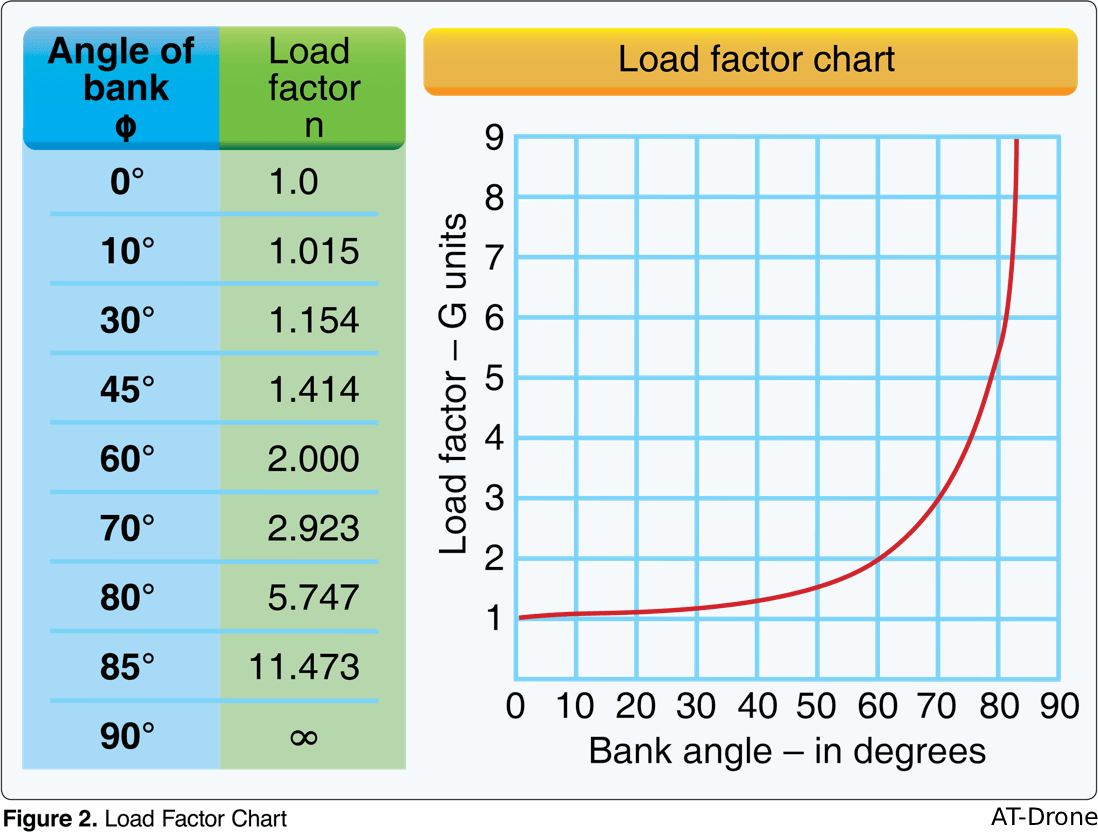
13. (Refer to Figure 2.) If an airplane weighs 4,500 pounds, what approximate weight would the airplane structure be required to support during a 45° banked turn while maintaining altitude?

14 / 33

14. The term 'angle of attack' is defined as the angle

15 / 33

15. During an approach to a stall, an increased load factor will cause the airplane to

16 / 33

16. During a spin to the left, which wing(s) is/are stalled?

17 / 33

17. (Refer to Figure 2.) If an airplane weighs 2,300 pounds, what approximate weight would the airplane structure be required to support during a 60° banked turn while maintaining altitude?

18 / 33

18. (Refer to Figure 2.) If an airplane weighs 3,300 pounds, what approximate weight would the airplane structure be required to support during a 30° banked turn while maintaining altitude?
19 / 33

19. The angle of attack at which an airplane wing stalls will

20 / 33

20. What causes an airplane (except a T-tail) to pitch nosedown when power is reduced and controls are not adjusted?

21 / 33

21. What determines the longitudinal stability of an airplane?

22 / 33

22. The four forces acting on an airplane in flight are

23 / 33

23. Which basic flight maneuver increases the load factor on an airplane as compared to straight-and-level flight?

24 / 33

24. Changes in the center of pressure of a wing affect the aircraft's

25 / 33

25. In what flight condition must an aircraft be placed in order to spin?

26 / 33

26. Loading an airplane to the most aft CG will cause the airplane to be

27 / 33

27. (Refer to figure 66.) While practicing S-turns, a consistently smaller half-circle is made on one side of the road than on the other, and this turn is not completed before crossing the road or reference line. This would most likely occur in turn

28 / 33

28. What is the relationship of lift, drag, thrust, and weight when the airplane is in straight-and-level flight?

29 / 33

29. Which statement relates to Bernoulli`s principle?

30 / 33

30. When executing an emergency approach to land in a single-engine airplane, it is important to maintain a constant glide speed because variations in glide speed

31 / 33

31. The angle between the chord line of an airfoil and the relative wind is known as the angle of

32 / 33

32. If an emergency situation requires a downwind landing, pilots should expect a faster

33 / 33

33. As altitude increases, the indicated airspeed at which a given airplane stalls in a particular configuration will

Your score is

0%

Leave a Reply

Your email address will not be published. Required fields are marked *

Scroll to Top