
Regulations, Procedures, and Other Aeronautical References
Government Regulations and Other Procedures Publications
As you progress with your pilot training, you will come across what will seem to be a never-ending series of instructions, procedures, methods, restrictions, and advisories, and you will wonder how you will be able to remember it all. You don’t have to. The Government Printing Office (GPO) distributes hundreds of publications on aviation subjects and you should become familiar with what is available. All government publications are available from the Government Printing Office in Washington, D.C., and GPO bookstores in major cities. You will also find that your local pilot supply store carries many of them. Private publishers offer reprints that are more convenient to use and considerably less expensive than the government publications (but no less official). The ASA editions of the Federal Aviation Regulations and Aeronautical Information Manual are excellent examples. The FAA publications are also available in electronic form, which has the additional benefit of the search function (so you can search any document or multiple documents for a specific word or topic). Many of these publications are available online. The web addresses in this book are only suggestions—there are many sources. You can find almost any FAA publication by going to faa.gov and typing the name of the desired publication into the search window.
Warning: Do not rely on the accuracy of FAA documentation provided by third parties for use on electronic devices. Those sources are frequently found to be incomplete. Always refer to the FAA website for the latest information.
Aeronautical Information Manual: Basic Flight Information and ATC Procedures (AIM)
The Aeronautical Information Manual (AIM) contains information on a host of aviation subjects and is an essential reference for flyers of both crewed and uncrewed aircraft. This list of chapter headings will give you some idea of the extent of coverage. (For each, I’ve indicated in parentheses if it has low, medium, or high relevance to sUAS; note that no section is irrelevant.)
- Navigation Aids (low)
- Aeronautical Lighting and Other Airport Visual Aids (medium)
- Airspace (high)
- Air Traffic Control (high)
- Air Traffic Procedures (high)
- Emergency Procedures (high)
- Safety of Flight (high)
- Medical Facts for Pilots (medium)
- Aeronautical Charts and Related Publications (high)
- Helicopter Operations (low)
- Unmanned Aircraft Systems (UAS) (high)
The chapter covering UAS provides some supplementary information for remote pilots that is written in a more explanatory and readable way than the regulations. The AIM offers a general overview of what rules apply to UAS and the access remote pilots have to the National Airspace System (NAS). Further details are supplied on the different sizes of UAS, UAS pilot testing, certification, and responsibilities, advanced air mobility (AAM), UAS operations at airports, and other best practices.
General
The AIM explains that UAS operations are governed by the Code of Federal Regulations (CFR) and the United States Code (USC), with specific rules based on the type of operation, purpose of flight, and weight of the UAS. Part 107 operations, which include commercial aerial photography, commercial aerial survey, and other for-hire operations, are limited to small UAS (sUAS) weighing less than 55 pounds.
The AIM explicitly calls out that recreational flyer operations—those in which uncrewed or model aircraft are operated for pleasure or recreation—are not governed by these regulations. Instead, 49 USC §44809 allows recreational flyers to operate uncrewed or model aircraft for leisure or recreation, typically using small UAS or models. Those operating UAS weighing over 55 pounds may comply with standards and limitations developed by a CBO and from fixed sites.
Larger UAS, such as public and civil UAS with a maximum gross operating weight (MGOW) of 55 pounds or greater, are covered by 14 CFR Part 91, UAS operations. For more information on public UAS operations, qualification requirements, and certification of aircraft and pilots, one should refer to AC 00-1.1 Public Aircraft Operations—Manned and Unmanned.
Although there seems to be some negative press about where drones can fly, the FAA is committed to integrating UAS into the NAS while maintaining operational capacity and safety. UAS operators can access the NAS in various ways, including operating within visual line of sight (VLOS) up to 400 feet above ground level (AGL) in uncontrolled (Class G) airspace. When operating within controlled airspace, specific authorization from air traffic control (ATC) is required.
sUAS operators governed by Part 107 can request airspace authorizations via the Low Altitude Authorization and Notification Capability (LAANC) or DroneZone (faadronezone-access.faa.gov/) to fly within Class B, Class C, Class D, or the lateral boundaries of the surface area of Class E airspace designated for an airport. Emergency airspace authorizations for Special Government Interest (SGI) UAS operations—not something you are likely to need—are also addressed in this chapter.
To be sure recreational sUAS pilots know where they can fly, the AIM points out that such operations are permitted in controlled and uncontrolled airspace under specific conditions. In Class B, C, D, or the surface area of Class E airspace, authorization is required. In Class G airspace, the aircraft must remain at no more than 400 feet AGL and comply with all airspace restrictions. Recreational flyers can operate at FAA-recognized fixed flying sites above 400 feet AGL or up to UAS Facility Maps (UASFM) specified altitudes in controlled airspace with airspace authorization obtained through LAANC. Public UAS and civil UAS with MGOWs of 55 pounds or more are allowed NAS access by complying with certain parts of 14 CFR Part 21, experimental certificates, and 14 CFR Part 91, UAS operations.
Safety Alert: Your First Step—Current Info
Welcome to the world of sUAS regulations! As you begin, remember that this book is a snapshot in time. The most current and official versions of all government publications and procedures discussed here are available online from the FAA. Make checking these resources your absolute first step in planning any operation to ensure you have the latest requirements.
Recreational pilots are not required to take The Recreational UAS Safety Test (TRUST) module. This resource, developed in consultation with multiple UAS stakeholders and interested party feedback, is available electronically and has no minimum age limit.
sUAS
The AIM further explains the premise behind Part 107 sUAS by stating that this Part is a regulatory first step for civil nonrecreational UAS operations, requiring a UAS to weigh less than 55 pounds, have a pilot who passed a knowledge test, and be registered. It allows routine sUAS operations without airworthiness certification, exemptions, or a COA for Class G airspace access. Individuals can request waivers for certain provisions, such as beyond visual line-of-sight (BVLOS), that have specific restrictions, such as the prohibition of hazardous material transport.
The FAA requires nearly all UAS flown in the NAS to be registered in their database. UAS with an MGOW of 55 pounds or more must be registered under 14 CFR Part 47, Aircraft Registration, while UAS less than 55 pounds may be registered under the FAA’s newer 14 CFR Part 48 online system.
For most operators of sUAS (UAS with MGOWs less than 55 pounds), registration under 14 CFR Part 48, Registration and Marking Requirements for Small Unmanned Aircraft, will be most expedient and the least expensive. Fees for Part 107 registration are per sUAS and valid for three years. Recreational flyers must register if their aircraft weighs more than 0.55 pounds (250 grams).
To register a UAS under 14 CFR Part 48, refer to the FAA’s DroneZone website and select registration under either Part 107 or the exception for recreational flyers. Registration fees for Part 107 are per sUAS and valid for three years. Each Part 107 registered sUAS will receive a different number.
To register a UAS under 14 CFR Part 48, a person must be 13 years of age or older and be a US citizen or legal permanent resident. If the owner is less than 13 years of age, another person 13 years of age or older must register the UAS and be a US citizen or legal permanent resident.
An FAA registration certificate will be issued after UAS registration and must be available for inspection during all flight operations. Federal law requires registered UAS operators to show their certificate of registration to any federal, state, or local law enforcement officer. Failure to register a UAS that requires registration may result in regulatory and criminal penalties, and the FAA may assess civil penalties up to $27,500.
Before flight, all UAS requiring registration must be visibly marked on the aircraft’s outside surface with a registration number, using engraving, a permanent label, or a permanent marker’.
Airspace Access for UAS
The fourth UAS section in the AIM outlines the guidelines for accessing the NAS based upon the type of operation, e.g., recreational or Part 107. Advisory Circular 91-57, Exception for Limited Recreational Operations of Unmanned Aircraft, advises recreational flyers to adhere to requirements for recreational status under 14 USC §44809. Failure to abide by these requirements may result in flight being considered 14 CFR Part 107 by the FAA, potentially leading to increased penalties if it is discovered that the pilot performs unsafe operations.
Realistically, recreational flyers will almost exclusively find themselves flying in uncontrolled (Class G) airspace, with the upper limit being 400 feet AGL. When operating in Class G airspace, the pilot must follow safety guidelines developed by a recognized community-based organization (CBO). For operations in controlled airspace or uncontrolled airspace above 400 feet AGL, the pilot must obtain prior authorization from the FAA Administrator or designee.
If you need to fly in controlled airspace (those other than Class G), recreational flyers have two basic options. Fixed sites, which are locations authorized by the FAA, are the first, and the second is at sanctioned events, which are sponsored events at existing fixed sites or temporary fixed sites. CBOs (e.g., Academy of Model Aeronautics, First Person View Freedom Coalition, Flite Test Community Association, STEM+C Inc.) requesting sanctioned or sponsored event authorization must make the location known to the FAA Administrator and establish mutually agreed upon operating procedures with the event organizer.
Part 107 allows remote pilots to fly in Class G airspace up to 400 feet AGL and within 400 feet of a structure without prior coordination with ATC. Other limitations for Part 107 operators are described in 14 CFR §107.51, Operating Limitations for sUAS. LAANC allows remote pilots to obtain real-time airspace authorization within the UASFM altitudes and stay informed about airspace restrictions and prohibitions.
If one needs some additional operational flexibility, the FAA does issue waivers to 14 CFR Part 107, allowing drone pilots to deviate from certain rules by demonstrating they can safely fly using alternative methods or safety mitigations. Waivers are listed in 14 CFR §107.205, List of Regulations Subject to Waiver. Any subpart of 14 CFR Part 107 rule not specifically listed in 14 CFR §107.205 is not subject to waiver and would require an exemption under 14 CFR Part 11, General Rulemaking Procedures.
To keep better track of drone operations and, in theory, increase public safety, the FAA has mandated remote identification (RID) for UAS. RID is crucial for UAS integration, as it allows the FAA, national security agencies, law enforcement, and others to distinguish compliant airspace users from those potentially posing a safety or security risk. 14 CFR Part 89, Remote Identification (RID) of Unmanned Aircraft, requires most drones operating in US airspace to have RID capability. UAS not equipped with RID capability will be limited to operating in specific FAA-approved geographic locations, such as FAA-Recognized Identification Areas (FRIAs).
The RID rule outlines three ways for drone pilots to meet the identification requirements: Standard RID, RID Broadcast Module, and FRIAs. Standard RID drones manufactured after September 16, 2022, can broadcast RID message elements directly from the unmanned aircraft from takeoff to shutdown. RID broadcasts a message that includes a unique identifier, an indication of the unmanned aircraft’s latitude, longitude, geometric altitude, velocity, control station latitude, longitude, geometric altitude, a time mark, and an emergency status indication.
A FRIA is a defined geographic area where persons can operate UAS without remote identification, provided they maintain visual line of sight. Operators must be physically located within the boundaries of the FRIA, only operate drones within those boundaries, and operate within VLOS at all times.
This AIM chapter also outlines information about operators that may be involved in commercial package delivery, agriculture, or the transport of hazard materials (HAZMAT). These operators are subject to various other sets of regulations. If these types of operations apply, be sure to carefully read the section covering such flights.
Airspace Restrictions to Flight
The NAS includes various classifications of airspace, both uncontrolled and controlled. UAS remote pilots and recreational flyers are generally permitted access to uncontrolled airspace without special permission, but this changes when access to controlled airspace is desired. All access to controlled airspace must be granted by ATC.
An additional subset of airspace, referred to as Special Use Airspace (SUA), is designated for locations where flight activities must be confined due to their nature or where limitations are imposed upon aircraft operations that are not a part of those activities, or both. These areas are generally depicted on aeronautical charts and will be indicated on the B4UFly and LAANC services for UAS. Temporary Flight Restrictions (TFRs) are nonpermanent airspace restrictions created to protect persons and property in the air or on the surface from an existing or imminent hazard associated with an incident on the surface. Examples of TFRs include natural disaster areas, congested flight areas, the area around spacecraft launches and recoveries, certain stadium sporting events, and the security of national public figures.
UAS operators should be aware that substantial fines and penalties can be levied on UAS remote pilots or recreational flyers violating a TFR. Operating a UAS over critical infrastructure, such as power grids, nuclear reactors, transportation centers, or political or military sites, can potentially create risk to people on the ground as well as fixed site facilities and associated infrastructure. To address security concerns, Public Law 114-190 and 115-254 mandate a process that would allow applicants to petition the FAA for restrictions from unmanned aircraft overflying their property.
Special Flight Rules Areas (SFRAs) are airspaces of defined dimensions above land areas or territorial waters within which the flight of aircraft is subject to special rules established after the September 11, 2001, attacks. Examples include the Washington, DC, Metropolitan Area SFRA, the Los Angeles SFRA, and in New York, the Hudson River SFRA. All aircraft are highly regulated within SFRAs. The inner area of some SFRAs, the Flight Restricted Zone (FRZ), is very highly restricted and prohibits all but previously vetted aircrew and aircraft from entering.
Airspace can also have certain local restrictions. While the FAA is designated by federal law to be the regulator of the NAS, some state and local authorities may also restrict access to local airspace. UAS pilots should be aware of these local rules. For example, some cities have passed laws that prohibit drones from taking off or landing from parks or other designated areas.
Other restrictions and provisions include flight over or near natural habitat or nature preserves, No Drone Zones, flight over or near crewed aircraft, and correctional institutions.
UAS Traffic Management
UAS traffic management (UTM) is a system that involves layers of information sharing and data exchange among various stakeholders, including UAS operators, service providers, and the FAA. A fully functional UTM system in the US is still under development. It is intended that UTM will communicate through a distributed information network, with real-time airspace constraints made available to UAS operators. The FAA will have access to applicable UTM operational information as needed. UAS operators not receiving ATC separation services will be required to participate in UTM at some level to meet performance requirements. Potential stakeholders in UTM include the FAA, the operator, the remote pilot-in-command (RPIC), and other stakeholders, such as public safety and the general public.
UAS Pilot Testing, Certification, and Responsibilities
This AIM section rehashes the various requirements placed upon UAS pilots. We are reminded that anyone who operates a civil sUAS in the NAS for nonrecreational purposes must have a Part 107 Certificate with a Small Unmanned Aircraft System Rating for civil UAS operations, and a TRUST certificate for recreational flying under 14 USC §44809. Applicants must be at least 16 years old and able to speak and understand English. For recreational flying, there are no minimum age or eligibility requirements.
For Part 107 operations, current 14 CFR Part 61 certificate holders can complete online training to obtain their 14 CFR Part 107, while those without a Part 61 certificate or a current flight review must take the Unmanned Aircraft General—Small (UAG) Knowledge Test at an FAA designated testing center. For recreational flying, those flying a UAS for recreational use under 49 USC §44809 must take and pass TRUST.
The FAA mandates recurrent training for individuals to maintain currency for a sUAS certificate issued under 14 CFR Part 107. This training must be taken within 24 months of passing the UAG Knowledge Test or completing the specified online training found on the FAA’s Become a Drone Pilot website. TRUST is taken once and done, and no recurrent testing is required for recreational operations.
A person holding an sUAS Certificate has all the privileges of the certificate, including the ability to operate at night and over people without a waiver under certain conditions. Any remote pilot with a 14 CFR Part 107 sUAS certificate issued prior to April 6, 2021, must take updated recurrent training to operate at night or over people.
The UAS AIM chapter also outlines details concerning the certification and requirements for Public Aircraft Operations (PAOs) and Part 135, 137, and other types of large civil UAS. Lastly, if you hold a foreign pilot certification, some additional information for you is provided.
Advanced Air Mobility
Advanced air mobility (AAM) is a new sector in the aerospace industry aimed at safely and efficiently integrating highly automated aircraft into the NAS. AAM consists of emerging technologies applied to aviation transportation systems, particularly in terms of new aircraft types. AAM use cases include urban air mobility (UAM), regional air mobility (RAM), public services, large cargo delivery, and private vehicles in urban environments.
UAS Operations on Airports
UAS operations on airports involve large public and civil aircraft operating from military, civilian, and dual-use airports, often under IFR (instrument flight rules). These operations require coordination with airport operators, air traffic control facilities, the FAA Regional Airport District Office, and, in some cases, the applicable State Department of Aviation. Requests for on-airport operations within controlled airspace must be submitted via DroneZone and are evaluated on a case-by-case basis due to risks associated with operating in close proximity to areas frequented by crewed aircraft.
Best Practices for UAS Operations and Interacting with ATC
The UAS pilot is responsible for the safe operation of their uncrewed aircraft, ensuring they are physically ready and knowledgeable about the flight, including operational parameters, limitations, local weather, and flight rules. Coordination and communication of airspace authorizations between UAS pilots and air traffic control (ATC) are handled within airspace access processes like LAANC and DroneZone. Requirements for coordination and communication are contained in individual waivers, agreements, or other predefined processes. Air traffic services provided to UAS operations are based on the type of authorization and any applicable limitations.
Small UAS operators should not contact ATC directly by radio or telephone for purposes of airspace access. Also, the use of an aviation radio frequency by the RPIC of an sUAS may constitute a violation of Federal Communications Commission (FCC) rules. Operators are encouraged to monitor local CTAF radio traffic when operating on or near an airport, for situational awareness.
Precautions When Operating Near People, Vehicles, Other Aircraft, and at Night
Remote pilots and recreational flyers must be cautious when flying over or near people, vehicles, crewed aircraft, and night operations. 14 CFR Part 107 allows certain operations over people and vehicles based on weight and construction, as well as the potential for injury to people on the ground. Part 91 pilots can refer to restrictions and permissions regarding flight over people in their respective COAs. Recreational flyers must follow safety guidelines of an accepted CBO, which usually include safety precautions for flight near people.
The pilot of any uncrewed aircraft operation has the ultimate responsibility to avoid crewed aircraft traffic, including helicopters, agricultural aircraft, light civil aircraft, and military aircraft. UAS pilots must ensure unrestricted line of sight to both their UAS and the airspace around it. If UAS interferes with public safety or emergency responder aircraft, substantial fines can be levied, including revocation or suspension of a pilot certificate and up to a $20,000 civil penalty per violation.
Night operations are permitted under 14 CFR Parts 91 and 107, and 49 USC §44809, but requirements for meteorological visibility and maintaining visual observation with the UAS at all times should be considered.
Accident and Incident Reporting
UAS operators are responsible for reporting incidents to the FAA, NTSB, or both. Reporting requirements vary depending on the type of UAS, such as recreational, civil, or public. Part 107 operators must report crashes causing serious injury or property damage, and Part 91 operators have additional, unique reporting requirements.
Environmental Best Practices
UAS operate in similar environments to crewed aircraft, with frequent encounters with hazards and environmental factors. Factors to consider include flight near protected conservation and noise-sensitive areas. Operators should follow best practices developed by the National Park Service, US Fish and Wildlife Service, US Forest Service, and National Oceanic and Atmospheric Administration when operating above these areas. Raptors, gulls, geese, and crows are most likely to attack UAS, potentially damaging propellers, causing engine failure, and injuring the bird. Remote pilots and recreational flyers should review engine-out procedures when operating near high bird concentrations.
UAS Operator Resources
The last part of the AIM chapter on UAS lists resources for UAS operators. This is essentially a list of websites that operators might want to use to supplement their knowledge base and to assist in planning and executing flight operations. For more information, refer to AIM 11-8-7.
Additional Resources
Figure 2-1 is an example of the type of detailed information on procedures available in the AIM. One specifically helpful section of the AIM is the includes a Pilot/Controller Glossary, so that you will know exactly what the controller means when instructions are given (controllers have an identical glossary in their governing order JO 7110.65 Air Traffic Control). The AIM is updated every two years, with changes every six months, and is available by subscription from the Government Printing Office. You will also find it for sale by ASA, combined with the Federal Aviation Regulations, at your pilot supply store (Figure 2-2).
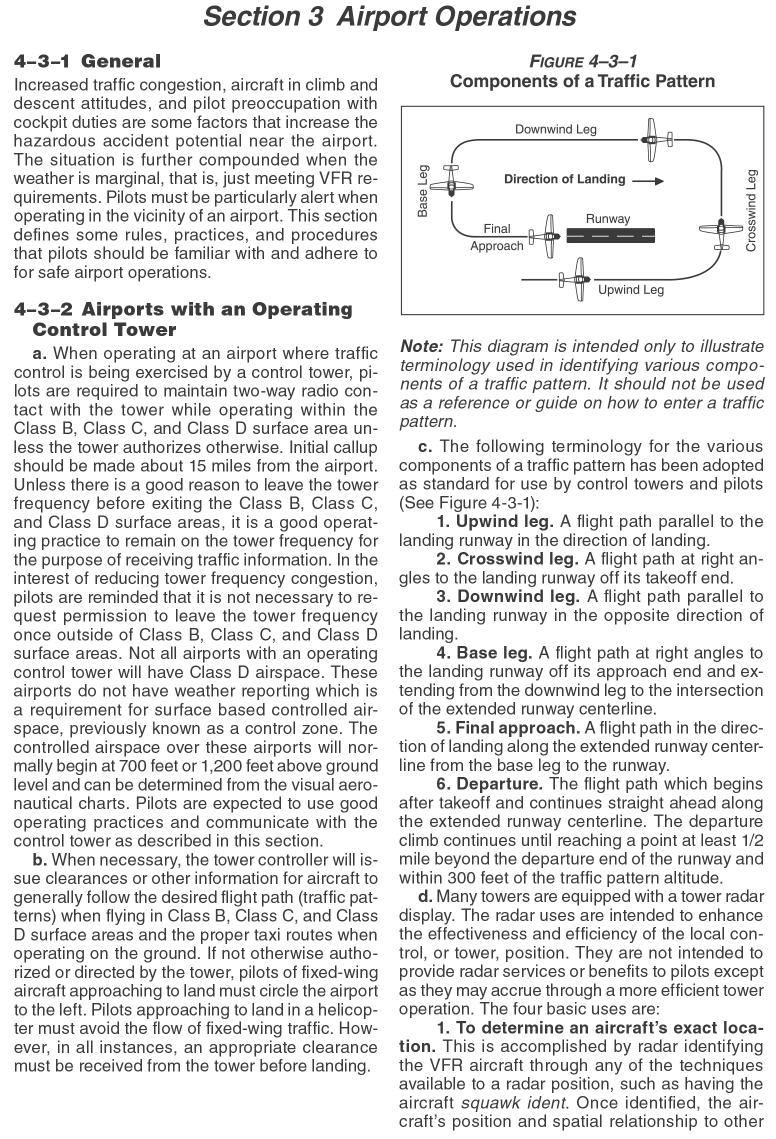
Figure 2-1. Example from a page of the AIM.

Figure 2-2. Federal Aviation Regulations in ASA’s FAR/AIM series.
Every new edition of the AIM contains a list of changes since the previous edition, and there are always many. Be very suspicious of information from a copy of the AIM that is more than a year old, unless it contains at least one change. The AIM may be viewed online at faa.gov/air_traffic/publications/.
Safety Alert: Aim Updates Matter
The Aeronautical Information Manual (AIM) is updated regularly. While this book covers key aspects, the detailed information in the official online AIM can change. Always verify the latest ATC procedures, airspace details, and best practices directly from the FAA’s current AIM publication before you fly.
Federal Aviation Regulations
The FAA expects you to be familiar with all of the Federal Aviation Regulations that apply to your flight operations, but as you read through the regulations, you should be able to distinguish between those that are nice to know but do not affect your day-to-day flying, and those which you must know (e.g., basic weather requirements or right-of-way rules). This lesson will discuss those regulations that require explanation or illustration for complete understanding, but all of Part 107 of the regulations apply to you when acting as a certificated remote pilot of sUAS. Before you say, “I can’t find it in the regs,” be sure that you have checked all sources. Note also that the regulations list things you cannot do—if a regulation does not prohibit something, it is permitted. A searchable version of all of the regulations can be found on the FAA’s website.1
Prior to flying, you must determine the purpose of your planned activity. Simply, are you going to be using the sUAS as a certificated remote pilot (i.e., commercial or other non-recreational use), or are you going to fly as a hobbyist (i.e., for recreational use)? Under statutory exception for limited recreational operations of unmanned aircraft, the recreational use of an unmanned aircraft is recreational use, Title 49 of the United States Code §44809. FAA Advisory Circular 91-57 restates the statutory conditions to operate under the exception and provides additional guidance on adhering to those conditions. If the operation does not meet the conditions for an exception for limited recreational use, then you must adhere to the regulations governed by Parts 107 and 89.
14 CFR Part 89—Remote Identification of Unmanned Aircraft
Regulations covering remote identification of sUAS can be found in 14 CFR Part 89. Part 107 is divided into five subparts: (A) General, (B) Operating Requirement, (C) FAA-Recognized Identification Areas (FRIAs), (D) Requirements for Standard Remote Identification Unmanned Aircraft and Remote Identification Broadcast Modules, (E) Means of Compliance, and (F) Remote ID Design and Production.
Part 89, Subpart A—General
14 CFR 89.1 Definitions. Two definitions are provided in this section. First, a declaration of compliance is “a record submitted to the FAA by the producer of a standard remote identification unmanned aircraft or remote identification broadcast module to attest that all the requirements of subpart F of this part have been met.” The second outlines that a home-built unmanned aircraft is an “unmanned aircraft that an individual built solely for education or recreation.”
14 CFR 89.5 Falsification, reproduction, alteration, or omission. This section prohibits fraudulent or intentionally false statements in documents related to acceptance, application, approval, authorization, certificate, declaration, designation, qualification, record, report, request for reconsideration, or similar submissions. It also prohibits reproduction or alteration for fraudulent purposes. No person can knowingly conceal or cause to be concealed a material fact in any document related to these submissions. If a person commits an act prohibited, they may face denial, suspension, rescission, or revocation of any instrument issued or granted by the Administrator, or a civil penalty.
Part 89, Subpart B—Operating Requirement
14 CFR 89.101 Applicability. This subpart applies to individuals operating unmanned aircraft registered under Part 47 or 48 of this chapter and foreign civil unmanned aircraft in the US but does not apply to operations transmitting ADS-B Out.
14 CFR 89.105 Remote Identification Requirement. Unless otherwise authorized by the Administrator or in §89.120, no one can operate a UAS in US airspace unless it meets the requirements of §89.110 or §89.115.
14 CFR 89.110 Operation of Standard Remote Identification Unmanned Aircraft. A person can comply with the remote identification requirement of §89.105 by operating a standard remote identification unmanned aircraft under certain conditions. These conditions include broadcasting message elements of §89.305 from takeoff to shutdown, and the person manipulating the flight controls must land the aircraft as soon as possible if it stops broadcasting. The unmanned aircraft must also meet certain requirements, such as its serial number being listed on an FAA-accepted declaration of compliance, being covered by a design approval or production approval, having functional remote identification equipment, and not being disabled. The Certificate of Aircraft Registration must include the aircraft’s serial number, as per applicable requirements, or be provided to the FAA in a notice of identification pursuant to §89.130 prior to the operation. These requirements must be met unless otherwise authorized by the Administrator.
14 CFR 89.115 Alternative Remote Identification. A person operating an unmanned aircraft that is not a standard remote identification unmanned aircraft can comply with the remote identification requirement of §89.105 by meeting certain conditions. One condition is if an unmanned aircraft is equipped with a remote identification broadcast module that meets the requirements of §89.320, and the serial number of the module must be listed on an FAA-accepted declaration of compliance. A person operating an unmanned aircraft must ensure that the remote identification broadcast module broadcasts the remote identification message elements of §89.315 directly from the unmanned aircraft from takeoff to shutdown. The person manipulating the flight controls of the unmanned aircraft system must be able to see the unmanned aircraft at all times throughout the operation. Prior to takeoff, the person manipulating the flight controls must ensure the remote identification broadcast module is functioning in accordance with this subpart. If the unmanned aircraft is no longer broadcasting the message elements of §89.315, the person must land the unmanned aircraft as soon as practicable.
What is Recreational Flight?
Many people assume that a recreational flight is not operated for a business or any form of compensation. However, that is not always the case. Financial compensation, or the lack of it, is not what determines if the flight is recreational or commercial. The following information can be used to help you determine what rules you should be operating under. Remember, the default regulation for drones weighing under 55 pounds is Part 107. The exception for recreational flyers only applies to flights that are purely for fun or personal enjoyment. When in doubt, use the FAA’s “What Kind of Drone Flyer Are You?” tool, or just fly under Part 107.2
Remote ID is not required in a few places. A person may operate an unmanned aircraft without remote identification equipment if the unmanned aircraft and the person manipulating the flight controls remain within the boundaries of an FAA-recognized identification area (FRIA) throughout the operation. The person manipulating the flight controls must be able to see the unmanned aircraft at all times during the operation.
14 CFR 89.120 Operation for Aeronautical Research or to Show Compliance with Regulations. The FAA allows operations without Remote ID if the flight is only for research purposes or is part of showing compliance with regulations.
14 CFR 89.125 Automatic-Dependent Surveillance-Broadcast (ADS-B) Out Prohibition. ADS-B Out should not be used as a means to provide Remote ID.
14 CFR 89.130 Confirmation of Identification. A person cannot operate a foreign registered civil unmanned aircraft with remote identification in the United States without submitting a notice of identification. The notice must include the name, physical address, telephone number(s), email address, manufacturer and model name, serial number, country of registration, and registration number. The FAA will issue a Confirmation of Identification upon completion of the notification requirements. The filing of a notification and the Confirmation of Identification do not affect United States aircraft registration. A person cannot operate a foreign-registered civil unmanned aircraft with remote identification in the United States unless they obtain a Confirmation of Identification, maintain it at the unmanned aircraft’s control station, and produce it when requested by the FAA or a law enforcement officer. The holder of a Confirmation of Identification must ensure the information provided remains accurate and must update it before operating the aircraft.
Part 89, Subpart C—FAA-Recognized Identification Areas (FRIAs)
14 CFR 89.201–230 Applicability, Eligibility, Requests, Duration, and Expiration of FRIAs. This subpart outlines the procedures for establishing a FRIA. Eligibility for this area is limited to community-based organizations (CBOs) and educational institutions. The application process involves submitting an application in a form and manner acceptable to the Administrator, which must include information such as the name of the eligible person, the individual making the request, a declaration that the individual has authority to act on behalf of the organization, the primary point of contact for communications with the FAA, the physical address of the proposed area, the location of the proposed area, any existing letter of agreement regarding the flying site, the intended purpose of the area, and any other required information.
The Administrator will assess applications and may require additional information or documentation, as needed. The Administrator will approve or deny an application, considering factors such as the existence of any FAA established flight or airspace restrictions limiting the operation of unmanned aircraft systems, the safe and efficient use of airspace by other aircraft, the safety and security of persons or property on the ground, and the need for an FAA-recognized identification area in the proposed location and proximity of other FAA-recognized identification areas.
A FRIA will be in effect for 48 calendar months after the date the FAA approves the request for establishment of a FRIA. Renewal requests must be submitted no later than 120 days prior to the expiration of the area.
Expiration and termination of a FRIA are subject to the Administrator’s decision. Termination can occur by request or by FAA, and the Administrator will notify the primary point of contact of the decision. A person may petition the Administrator for reconsideration of the decision no later than 30 calendar days after the termination of a FRIA. Part 13, subpart D, of this chapter does not apply to the procedures of this section.
Part 89, Subpart D—Requirements for Standard Remote Identification Unmanned Aircraft and Remote Identification Broadcast Modules
14 CFR 89.305–320 Minimum requirements for Remote ID for UAS. This subpart outlines the minimum message element set and performance requirements for standard remote identification unmanned aircraft and remote identification broadcast modules. The minimum message elements include the identity of the unmanned aircraft, such as a serial number or session ID, latitude and longitude of the control station, geometric altitude, velocity of the unmanned aircraft, coordinated Universal Time (UTC) time of applicability of a position source output, and an indication of the emergency status.
The minimum performance requirements include control station location, time mark synchronization, self-testing and monitoring, tamper resistance, error correction, interference considerations, message broadcast, and accuracy of reported geometric position, altitude, and altitude. The unmanned aircraft must not be able to take off if the remote identification equipment is not functional, continuously monitor the functionality from takeoff to shutdown, and provide notifications of malfunction or failure.
The unmanned aircraft must also be capable of broadcasting message elements using a non-proprietary broadcast specification and radio frequency spectrum compatible with personal wireless devices in accordance with 47 CFR part 15. Any broadcasting device used must be integrated into the unmanned aircraft without modification to its authorized radio frequency parameters and designed to maximize the range at which the broadcast can be received while complying with 47 CFR part 15 and other applicable laws.
The reported geometric position, altitude, velocity, and time of broadcast must be accurate within 100 feet of the true position, 15 feet of the true geometric altitude, 150 feet of the true geometric altitude, no later than 1.0 seconds from the time of measurement to the time of broadcast, and broadcast at a rate of at least 1 message per second. The unmanned aircraft must not be able to take off unless it is broadcasting the message elements in §89.305.
Remote identification broadcast modules are essential for identifying unmanned aircraft, providing information such as the aircraft’s identity, latitude and longitude, geometric altitude, velocity, take-off location, and geometric altitude. These modules must also have a time mark indicating the Coordinated Universal Time (UTC) time of applicability.
Minimum performance requirements for these modules include take-off location determination, time mark synchronization, self-testing and monitoring, tamper resistance, error correction, interference considerations, message broadcast, and accuracy in reported geometric position, altitude, and take-off location. The module must be designed to maximize the range of the broadcast while complying with 47 CFR part 15 and other applicable laws.
Message elements performance requirements include accurate reporting of the unmanned aircraft’s position, altitude, take-off location, and geometric altitude within 100 feet of the true position, 150 feet of the true geometric altitude, and within 100 feet of the true geometric position. The module must broadcast the latitude, longitude, and geometric altitude of the unmanned aircraft no later than 1.0 seconds from the time of measurement to the time of broadcast, and at a rate of at least 1 message per second.
In summary, remote identification broadcast modules must meet minimum performance requirements to ensure safe and efficient operation of unmanned aircraft.
Part 89, Subpart E—Means of Compliance
14 CFR 89.401–420 Compliance with Remote ID Requirements. The subpart outlines requirements for means of compliance with subpart D of the FAA for the design and production of standard remote identification unmanned aircraft or broadcast modules. It outlines procedural requirements for submission and acceptance of means of compliance, including eligibility, required information, testing and validation procedures, and rescindability.
To submit a means of compliance, a person must provide the name, contact information, detailed description, explanation of how the means addresses the minimum performance requirements, and any substantiating material. The FAA will evaluate the submission and may request additional information or documentation. If the person proves that the means of compliance meets the requirements, the FAA will notify them that the means of compliance has been accepted.
The subpart also states that a means of compliance is subject to ongoing review by the FAA and acceptance may be rescinded if it does not meet the requirements. The subpart also states that part 13, subpart D, of this chapter, does not apply to the procedures of paragraph (a) of this section.
Part 89, Subpart F—Remote ID Design and Production
14 CFR 89.501–545 All Things Related to Remote ID Equipment. This subpart outlines requirements for designing and producing unmanned aircraft with remote identification in US airspace. It covers remote identification broadcast modules and procedures for submitting, accepting, and rescission of declarations of compliance. The FAA has updated regulations for standard remote identification unmanned aircraft and modules, requiring minimum performance requirements and a declaration of compliance.
14 CFR Part 107—Small Unmanned Aircraft Systems
To use sUAS for commercial or other non-recreational missions and serve as the remote pilot-in-command (RPIC), you must gain your Remote Pilot Certification, which requires a fair amount of aeronautical knowledge that, unless you are already a crewed aircraft pilot, will likely not be very familiar to you. Further, in order to safely fly in the same skies as crewed aircraft (ranging from general aviation up to airliners), you will need more subject matter proficiency than just the minimum required to pass the written Remote Pilot Knowledge Exam. So welcome aspiring remote pilot (or curious current remote pilot)! The first task at hand, as is almost always the case in anything related to aviation, is to understand all the regulations associated with sUAS and your intended use for them.
Regulations covering non-recreational sUAS flying can be found in 14 CFR Part 107. Part 107 is divided into five subparts: (A) General, (B) Operating Rules, (C) Remote Pilot Certification, (D) Operations Over Human Beings, and (E) Waivers.
Part 107, Subpart A—General
14 CFR 107.1 Applicability. This part of the regulations sets the stage as to what is covered by Part 107. Exceptions to this applicability include air carrier operations, any aircraft subject to the provisions of 49 USC §44809 (recreational use), those with an exemption under Section 333 of Public Law 112-95 or 49 USC §44807, and any operation that a person elects to conduct under Part 91 where an airworthiness certificate has been issued. If you don’t know what Section 333 exemptions are, then they most likely don’t apply to your operations.
14 CFR 107.2 Applicability of certification procedures for products and articles. This simply states that Part 21 of Title 14 does not apply to small unmanned aircraft systems operated under Part 107 unless the sUAS will be operating over human beings in accordance with 14 CFR §107.140.
14 CFR 107.3 Definitions. This section makes official the definitions of certain terms that are used in the rest of the regulations. It is important to note that if anything in this section conflicts with definitions in 14 CFR §1.1 (general definitions for all regulations), those found in Part 107 are “controlling”—i.e., the ones you should use.
- Control station means an interface used by the remote pilot to control the flight path of the small unmanned aircraft.
- Corrective lenses mean spectacles or contact lenses.
- Declaration of compliance means a record submitted to the FAA that certifies the small unmanned aircraft conforms to the Category 2 or Category 3 requirements under subpart D of this part.
- Small unmanned aircraft means an unmanned aircraft weighing less than 55 pounds on takeoff, including everything that is on board or otherwise attached to the aircraft.
- Small unmanned aircraft system (small UAS) means a small unmanned aircraft and its associated elements (including communication links and the components that control the small unmanned aircraft) that are required for the safe and efficient operation of the small unmanned aircraft in the national airspace system.
- Unmanned aircraft means an aircraft operated without the possibility of direct human intervention from within or on the aircraft.
- Visual observer means a person who is designated by the remote PIC to assist the remote PIC and the person manipulating the flight controls of the small UAS to see and avoid other air traffic or objects aloft or on the ground.
Safety Alert: Part 107 Evolves
14 CFR Part 107 is the foundation for non-recreational sUAS operations, but it is not static. The FAA issues new rules and interpretations. Before planning your operations under Part 107, confirm you are referring to the very latest version of the regulation on the FAA’s website to ensure full compliance.
14 CFR 107.5 Falsification, reproduction, or alteration. To summarize this section: Don’t mess with the FAA. Any fraudulent or intentional false reports/records to show compliance with Part 107, as well as any reproduction or alteration of certificates, ratings, authorizations, or reports under Part 107, can land you in hot water. If you do any of the aforementioned, you can be denied from applying for a Remote Pilot certificate or a certificate of waiver, have your certificate or waiver suspended or revoked, or face civil penalty.
14 CFR 107.7 Inspection, testing, and demonstration of compliance. A remote pilot, owner, or person manipulating flight controls of an sUAS must have a physical, accessible Remote Pilot Certificate with an sUAS rating and identification. The certificate must be presented for inspection by the Administrator, an authorized representative of the National Transportation Safety Board, a federal, state, or local law enforcement officer, or an authorized representative of the Transportation Security Administration. The remote pilot must also make available any document, record, or report required to be kept under the regulations.
Upon request, the remote pilot, owner, operator, or person manipulating the flight controls must allow the Administrator to conduct tests or inspections to determine compliance with this part. Any person holding an FAA-accepted declaration of compliance under subpart D must provide the necessary documents and reports to the Administrator. Additionally, the person must allow the Administrator to inspect the facilities, technical data, and any manufactured sUAS and witness any necessary tests to determine compliance with that subpart.
14 CFR 107.9 Accident reporting. In order for the FAA to get a better sense of the actual level of safety that exists within sUAS flying, rather than relying only on forecasts and projections, it is important to report any accidents, per this regulation. It may sound scary to report an accident to the federal government, but such reports are not intended to be a means of enforcement or penalty, but for information purposes. (That said, you should not be doing anything contrary to regulations, as you may be penalized.) So if something bad happens, the remote PIC has 10 calendar days after the event to file a report to the FAA. Not every little thing has to be reported; in fact, only two conditions require such a report: (1) if someone received serious injury or anyone is knocked unconscious, and/or (2) there is damage to property (other than the sUAS), unless the cost of repair (including labor and materials) does not exceed $500 or the fair market value to replace the property does not exceed $500 (if determined to be a total loss). For example, let’s say you’re out flying your $1,000 sUAS at a park and you fly it into someone’s car. It causes around $500 in paint damage. Do you have to report this as an accident? It depends. If the total cost of repair including labor is $500 or less, no report is required. But if there were labor costs on top of the $500 in damages, then yes, it would need to be reported. You may be asking, “Wait, but my drone is $1,000 and it’s ruined!” Remember that the cost of or damage to the sUAS is not a factor in accident reporting. The FAA’s sUAS accident reporting system can be found at faadronezone.faa.gov.
Although the FAA does not specifically describe it in Part 107, the term “serious injury” does appear in other regulations and documents. This level of injury is defined as “any injury which: (1) requires hospitalization for more than 48 hours, commencing within 7 days from the date an injury was received; (2) results in a fracture of any bone (except simple fractures of fingers, toes, or nose); (3) causes severe hemorrhages, or nerve, muscle, or tendon damage; (4) involves any internal organ; or (5) involves second- or third-degree burns, or any burns affecting more than 5 percent of the body surface” (FAA Order 8020.16 and 49 CFR §830.2).
It is critical to note that while the FAA requires accident reports under the aforementioned circumstances, additional reporting may also be required. Just like in crewed aircraft accidents, the National Transportation Safety Board (NTSB), which is charged with investigating transportation accidents, may need to be involved: FAA reports are not a substitute for separate accident/incident reporting required by the NTSB under 49 CFR §830.5. According to the NTSB,
An unmanned aircraft accident is defined in 49 C.F.R. § 830.2 as an occurrence associated with the operation of any public or civil unmanned aircraft system that takes place between the time that the system is activated with the purpose of flight and the time that the system is deactivated at the conclusion of its mission, in which: (1) Any person suffers death or serious injury; or (2) The aircraft has a maximum gross takeoff weight of 300 pounds or greater and sustains substantial damage.3
An example of a public sUAS is one operated by a government agency, while a civil sUAS is one operated by a private individual or entity (used for non-hobby/non-recreational purposes). The official definition of substantial damage, as provided in 49 CFR §830.2, is
damage or failure which adversely affects the structural strength, performance, or flight characteristics of the aircraft, and which would normally require major repair or replacement of the affected component. Engine failure or damage limited to an engine if only one engine fails or is damaged, bent fairings or cowling, dented skin, small punctured holes in the skin or fabric, ground damage to rotor or propeller blades, and damage to landing gear, wheels, tires, flaps, engine accessories, brakes, or wingtips are not considered “substantial damage” for the purpose of this part.
Immediate notification of the NTSB is required upon the occurrence of an accident, with a formal report being filed no later than 10 days after the event.
So let’s say you’re flying your quadcopter sUAS to photograph the scenery at a beachfront location when one of the propellers shatters for no apparent reason. Does this require NTSB notification? Technically the answer is no, because an sUAS is less than 300 pounds. If you were flying a 300-pound UAS and this type of propeller failure occurred, it would require notification. The NTSB does have the discretion to investigate what it views as non-safety critical occurrences. What if your sUAS suffers an uncontrolled fly-away and crashes into a bystander, breaking the person’s arm. Do you have to tell the NTSB? Yes, this meets the definition of a serious injury, so you would need to make the report.
Additional parts of 49 CFR §830.5 apply to UAS operations, including the following occurrences which require notification of the NTSB:4
- Flight control system malfunction or failure: For an uncrewed aircraft, a true “fly-away” would qualify. A lost link that behaves as expected does not qualify.
- Inability of any required flight crewmember to perform normal flight duties as a result of injury or illness. Examples of required flight crewmembers include the remote pilot, or visual observer, if required by regulation. This does not include an optional payload operator.
- Inflight fire, which is generally associated with batteries.
- Aircraft collision in flight.
- More than $25,000 in damage to objects other than the aircraft.
- Damage to helicopter tail or main rotor blades, including ground damage, that requires major repair or replacement of the blade(s).
- An aircraft is overdue and is believed to have been involved in an accident.
It is important to note that no NTSB notification is required for occurrences involving hobby/recreational use of UAS.
Part 107, Subpart B—Operating Rules
14 CFR 107.11 Applicability. This part doesn’t really tell us anything we don’t already know, which is that the following operating rules apply to civil sUAS users covered under Part 107 (i.e., non-hobby/non-recreational users).
14 CFR 107.12 Requirement for a remote pilot certificate with a small UAS rating. In order to manipulate the controls of a sUAS, a person must have a remote pilot certificate with a small UAS rating issued under Part 107 and be compliant with the requirements under this part (e.g., §107.65), or the person at the controls of the sUAS must be under the supervision of the aforementioned certificated pilot who has the ability to immediately take over control as necessary. The Administrator (i.e., FAA) may allow an airman to operate a civil foreign sUAS, consistent with the appropriate international standards, without an FAA-issued remote pilot certificate.
14 CFR 107.13 Registration. This section discusses the requirement to comply with 14 CFR §91.203 (a)(2), which refers to the requirement to register your sUAS. Regardless of your purpose of flying (recreational or not), any sUAS over 0.55 pounds must be registered. You can register online at faadronezone.faa.gov.
14 CFR 107.15 Condition for safe operation. The FAA does not want remote pilots flying sUAS that are not in a safe condition to fly. Before each flight, the remote PIC must check/inspect the sUAS to ensure it is fit to fly.
14 CFR 107.17 Medical condition. Although no medical exam is required to be a remote pilot, such as is required to be a crewed aircraft pilot, the person who is manipulating the controls of an sUAS cannot have (or have reason to believe that they have) a physical or mental condition that would interfere with the safe operation of the sUAS. The same standard applies to the remote PIC, visual observer, or direct participant in the operation.
14 CFR 107.19 Remote Pilot in Command. The person designated as the remote PIC before and during the flight of an sUAS is directly responsible for and is the final authority as to the operation. Additionally, this individual is responsible for ensuring that the sUAS does not pose any hazard to people, aircraft, or property in the event of the loss of control of the aircraft; that the operation complies with all applicable regulations; and that they have the ability to direct (control) the sUAS to ensure it complies with the aforementioned and other parts of the regulations.
14 CFR 107.21 In-flight emergency. During an emergency (one that is urgent and requires immediate response), the remote PIC can deviate from any rule as needed to deal with the emergency. Anyone who deviates from regulations per the aforementioned caveat must, upon request, send a written report to the Administrator (FAA).
14 CFR 107.23 Hazardous operation. It should be no surprise that no person may operate a sUAS carelessly or recklessly in a way that could endanger people or property. Also, objects cannot be dropped from sUAS in a way that endangers people or property.
14 CFR 107.25 Operation from a moving vehicle or aircraft. I know it sounds crazy. That’s why there is a regulation. No person can operate a sUAS from a moving aircraft. You cannot operate an sUAS from a moving land or water vehicle, unless you are in a sparsely populated area (e.g., the middle of nowhere) and the aircraft is not transporting property for compensation or hire.
14 CFR 107.27 Alcohol or drugs. The person manipulating the controls of an sUAS, the remote PIC, and/or the visual observer must comply with 14 CFR §91.17 and §91.19. While much of §91.17 relates specifically to crewed aircraft, the following standards clearly also apply to sUAS: No person may act or attempt to act as any of the previously mentioned crewmembers within eight hours of drinking alcoholic beverages, while under the influence of alcohol, while using any drugs that may impair safe use of the aircraft, or while having a 0.04 or more blood or breath alcohol concentration. This rule also implies that law enforcement may be able to request a sobriety test similar to those issued to suspected drunk drivers. Not surprisingly, you cannot transport narcotic drugs, marihuana, and depressant or stimulant drugs/substances controlled in federal or state statutes via sUAS, as specified by 14 CFR §91.19 (unless, of course, you are authorized to do so per the rule, but I don’t recommend asking for a waiver for that).
14 CFR 107.29 Operation at night. In short, you cannot operate your sUAS at night or during the period of civil twilight unless the unmanned aircraft is operating with lighted anti-collision lights. These lights must be visible for 3 statute miles and have a flash rate sufficient to avoid a collision. In the interest of operational safety, you may, as the remote PIC, reduce the intensity of the anti-collision lights, but at no time may you extinguish the lights. In the contiguous United States, evening civil twilight is the period from sunset until 30 minutes after sunset, and morning civil twilight is the period beginning 30 minutes prior to sunrise until sunrise. The definition of “civil twilight” can get tricky for Alaska; you will need to check The Air Almanac (available at aa.usno.navy.mil/publications/aira).
To operate at night, the remote PIC must have completed an initial knowledge test or recurrency training following April 6, 2021, as applicable under §107.65. This is to ensure the remote PIC is familiar with the changes to regulations surrounding operations at night that took effect in April 2021. Also, any waivers for night flight issued before April 2021 are no longer valid.
14 CFR 107.31 Visual line of sight aircraft operation. At all times during flight, the remote PIC and the person manipulating the controls of the sUAS (if not the same person) or the visual observer must be able to determine the location of the sUAS; determine its attitude, altitude, and direction of flight; and ensure it is not endangering persons or property. Also, the applicable individual(s) must be able to monitor the airspace for other air traffic or hazards. This situational awareness must be maintained through line-of-sight that is unaided by anything other than corrective lenses.
14 CFR 107.33 Visual observer. If used, the visual observer must be in communication with the remote PIC and the person manipulating the controls of the sUAS (if different). The remote PIC must ensure that the visual observer can see the sUAS and is able to determine the necessary flight status information required in Section 107.31. The key is that all participants are communicating to maintain awareness of the sUAS position via direct observation and to vigilantly monitor the local area for any and all hazards.
14 CFR 107.35 Operation of multiple small unmanned aircraft. No person can be a remote PIC or visual observer for more than one sUAS at any given time.
14 CFR 107.36 Carriage of hazardous material. The government does not want sUAS transporting hazardous material; thus, sUAS are prohibited from carrying things defined as hazardous in 49 CFR §171.8. The term hazardous material “includes hazardous substances, hazardous wastes, marine pollutants, elevated temperature materials, materials designated as hazardous in the Hazardous Materials Table (see 49 CFR 172.101), and materials that meet the defining criteria for hazard classes and divisions in part 173 of this subchapter.”5 Interestingly, lithium-type batteries, such as those used to power many sUAS, are considered hazardous material. However, if you’re transporting an sUAS, the battery is part of the system, so you’re not considered to technically be “carrying” it, as you would be if transporting a lithium battery for delivery to a customer or remote location.
14 CFR 107.37 Operation near aircraft; right-of-way rules. The simplest way to remember this rule is that sUAS must give way to any and all aircraft, airborne vehicle, and launch/recovery vehicles. Yielding right of way also means you cannot fly your sUAS over, under, or ahead of the aforementioned vehicles unless the sUAS is well clear of them. You may never operate an sUAS so close to another aircraft that it creates the potential for a collision. Considering it is hard to judge distances between sUAS and other objects that are aloft, it is best to remain well clear of any local traffic. As the regulation is written, this means you must also give way to other sUAS and avoid flying close enough to other sUAS to create a collision hazard.
14 CFR 107.39 Operation over human beings. The operation of a small unmanned aircraft over human beings is not permitted unless certain conditions are met. The individual or individuals must be directly participating in the operation (e.g., visual observer). The individual or individuals not part of the operation must be under a covered structure or enclosed in a stationary vehicle, providing them protection from a falling small unmanned aircraft. In addition, the small unmanned aircraft may be operated over human beings if the operation being conducted meets one of the requirements for operational categories listed in Subpart D of Part 107. There are four of these categories, and we will discuss each of them in depth later in this section under Part 107, Subpart D—Operations Over Human Beings.
14 CFR 107.41 Operation in certain airspace. No person can operate an sUAS in what is referred to as a controlled airspace (Class B, C, D, or surface-based Class E) without prior authorization from air traffic control. It is unlikely you will be granted permission to operate in these types of airspace without going through a formal airspace waiver process. You can apply for an airspace waiver at faadronezone.faa.gov. Thus, Part 107 users are essentially restricted to uncontrolled (Class G) airspace. There are some exceptions to this in which you may enter Class E airspace not associated with an airport (i.e., not surface-based Class E) without notifying air traffic control and, of course, users can petition for a waiver of this part of the rule.
14 CFR 107.43 Operation in the vicinity of airports. Remote pilots must avoid interfering with operations and traffic patterns at any airport, heliport, or seaplane base. In cities, heliports may be everywhere—on or near police buildings, at television stations, at hospitals, or at local businesses just for convenience. One of the best resources to determine what types of facilities are near your operation is the FAA’s B4UFLY service, and you can also refer to local aviation charts.
14 CFR 107.45 Operation in prohibited or restricted areas. Remote pilots are not allowed to operate sUAS in prohibited or restricted airspace without permission from the “owner” of the airspace (i.e., the using or controlling agency). Prohibited areas are typically designated over very sensitive locations such as the White House and Camp David. Sorry, you’re not likely to get permission from the government to snap photos of the president. Restricted areas usually have some sort of military activity or national security interest within them. Again, it’s unlikely you will get permission to enter, but it is important to note that some locations are designated “restricted” only at specific days and times. When they are not active, you are permitted to enter without prior notification (although it is very wise to call anyway, in case the schedule has changed). For information about the dimensions, time frames (if applicable), and contact information for restricted airspace, refer to aeronautical charts or call Flight Service (FSS).
Scenario: Airspace Incursion Near a Busy Airport
A commercial sUAS operator conducted a mapping mission several miles from a major international airport. Despite checking airspace maps, they did not fully understand the complex Class B airspace boundaries and an associated arrival corridor. During the flight, their drone briefly entered the outer ring of the Class B airspace. Air traffic control detected the unauthorized presence, causing potential conflict with an arriving commercial aircraft. The FAA later contacted the operator, resulting in an investigation and enforcement action as a result of the airspace violation and operating in controlled airspace without authorization. This scenario highlights the critical need remote pilots have for a thorough understanding of all surrounding airspace, including complex terminal areas and associated procedures, not just the immediate vicinity of their operation.
14 CFR 107.47 Flight restrictions in the proximity of certain areas designated by Notice to Airmen. This part states that the remote PIC must comply with 14 CFR §§91.137–145 and §99.7. Simply, sUAS operators must comply with restrictions put forth via Notices to Airmen (NOTAMs). These may be issued in the vicinity of disaster/hazard areas, in proximity to the president or other parties, and near space flight operations, aerial demonstrations, and major sporting events. Additionally, emergency traffic rules may be put into place, such as the grounding of all air traffic after the 9/11 attacks, or during extreme atmospheric pressure conditions (e.g., very high barometric pressure). Examples of where you will be restricted from operating per NOTAMs include the Super Bowl, forest fires, volcanic eruptions, air shows, and rocket launches. It is critical that remote pilots, just like crewed pilots, check for all possible NOTAMs or any other flight restrictions prior to operations. There are also special security instructions for operations near what are called Air Defense Identification Zones (ADIZs) or Defense Areas. If you are operating near these areas, be sure to comply with any and all restrictions or instructions. ADIZ are located near the edge of US airspace off the East and West Coasts as well as along the border with Mexico. ADIZs also surround coastal Alaska, Hawaii, and some other US territories.
14 CFR 107.49 Preflight familiarization, inspection, and actions for aircraft operation. Before each flight, the remote PIC must evaluate the surface and air operating environments to include assessing them for potential risks to persons and property. The remote PIC must check local weather conditions (which requires more than simply looking out the window), local airspace (to determine the type of airspace operating in), any/all applicable flight restrictions (e.g., NOTAMs), location of persons or property on the surface (bystanders, cars, children, dogs, etc.), and any ground hazards (such as powerlines). The remote PIC must also ensure all persons participating in the operation of the sUAS are informed about operating conditions, emergency procedures, contingency procedures, roles and responsibilities, and hazards. The remote PIC must confirm that all control links between the ground control station and the sUAS are working adequately. Also, the sUAS should have enough power (electric or gas) for the intended length of operation. Lastly, the RPIC must ensure that any object that is attached or carried by the sUAS does not negatively affect the flight characteristics or controllability of the aircraft and that all items are securely connected so as to not inadvertently become a falling object. Should the operation overfly human subjects under subpart D of this section, verify the aircraft complies with the stipulations of §107.110, §107.120(a), §107.130(a), or §107.140, as relevant.
14 CFR 107.51 Operating limitations for small unmanned aircraft. The remote PIC and the person manipulating the controls of an sUAS (if different) must comply with the following operational limitations: a maximum groundspeed of 87 knots (100 mph); a maximum altitude of 400 feet AGL (unless within 400 feet of a structure, then no higher than 400 feet above the structure’s highest point); a minimum flight visibility of 3 statute miles as observed at the ground station; and operations closer than 500 feet below and 2,000 feet horizontally from any cloud. For the purposes of this rule, flight visibility is defined as the average slant distance from the control station (since the sUAS is most likely viewed from the ground) that prominent unlighted objects during the day and prominent lighted objects during the night may be seen and identified.
This rule creates some “interesting” situations that must be considered. For example, let’s say that you have set up your ground station close to the top of a canyon ridge. If you fly your sUAS out over the canyon, you may suddenly be more than 400 feet AGL, but if you were to drop the aircraft to 400 feet AGL you may no longer have it in your line of sight. In another example, if you are operating within 400 feet of a structure and go up to 400 feet above the highest point on the structure, it is also possible that your sUAS could end up in Class E airspace (which usually starts at 700 or 1,200 feet AGL depending on the location). In addition, the further the sUAS gets from you and/or your visual observer (if applicable), it becomes increasingly tough to judge when you are 500 feet below or 2,000 feet horizontally from clouds. Use excess caution and stay well clear of all clouds and areas of reduced visibility. It is best to think these things through before going flying.
Part 107, Subpart C—Remote Pilot Certification
14 CFR 107.52 ATC transponder equipment prohibition. This section just states that unless you have permission from the FAA, your sUAS should not have an operating transponder.
14 CFR 107.53 Automatic Dependent Surveillance–Broadcast (ADS-B) out prohibition. This section states that unless you have permission from the FAA, your sUAS should not have an operating ADS-B Out (transmitting) device.
14 CFR 107.56 Applicability. This subpart of the rule applies to the requirements to be issued a remote pilot certificate with an sUAS rating.
14 CFR 107.57 Offenses involving alcohol or drugs. If you get convicted of any federal or state statute related to drug dealing, you may be subject to denial of an application for a remote pilot certificate with sUAS rating for up to one year after the date of the final conviction, and if you already have such certification, it may be suspended or revoked. If you are convicted of violating the regulations relating to drugs and alcohol spelled out in 14 CFR §91.17(a) or §91.19(a), you may be subject to the same aforementioned admonishments (see above description of 14 CFR §107.27).
14 CFR 107.59 Refusal to submit to an alcohol test or to furnish test results. If law enforcement or the administrator (FAA) want to test you for alcohol in your system and you refuse or will not release results to the asking party, you may be subject to losing your right to apply for a remote pilot certificate with sUAS rating. If you hold one already, the certificate may be suspended or revoked.
14 CFR 107.61 Eligibility. In order to be eligible for the remote pilot certificate, a person must be at least 16 years old; be able to read, speak, and understand English; not know or have reason to know that they have a physical or mental condition that would interfere with sUAS operations; and demonstrate aeronautical knowledge necessary to operate sUAS. The proficiency in aeronautical knowledge can be satisfied either by (1) taking the initial aeronautical knowledge test (Remote Pilot Knowledge Test [Unmanned Aircraft General, or UAG]), or (2) if you hold a pilot certificate (other than student pilot) issued under 14 CFR Part 61, by meeting the flight review requirements in 14 CFR §61.56 and has completed training covering the areas of knowledge specified in §107.74.
14 CFR 107.63 Issuance of a remote pilot certificate with a small UAS rating. In order to get your remote pilot certificate with sUAS rating, you must submit an application that includes your passing airman knowledge test report, or if you hold a pilot certificate (other than a student pilot certificate) issued under Part 61 and meet the flight review requirements specified in §61.56, a certificate of completion of an initial training course under this part that covers the areas of knowledge specified in §107.74 must be shown to a Flight Standards office, designated pilot examiner, an airman certification representative at a flight school, a certificated flight instructor, or other person authorized by the Administrator. Current pilots must present identification and a logbook endorsement showing compliance with the flight review requirements specified in 14 CFR §61.56.
The FAA has eliminated much of the paperwork in keeping track of pilots and flight time by instituting the Integrated Airman Certification and/or Rating Application (IACRA). This system has essentially all but replaced paper applications. You will need to sign up for an account and follow the instructions to secure your remote pilot certificate once you have completed the necessary test or training. You will receive an FAA Tracking Number; write it in your logbook or somewhere where it can’t be lost—you will need it. The nice thing about this system is that, after passing the UAG test, you can link your score results to your IACRA application and immediately receive your temporary remote pilot certificate.
14 CFR 107.64 Temporary certificate. A temporary remote pilot certificate with sUAS rating is valid for up to 120 days. You should receive your permanent certificate within that time frame. The temporary certificate expires on the expiration date shown on the certificate, upon receipt of the permanent certificate, or upon notice of its denial or revocation.
14 CFR 107.65 Aeronautical knowledge recency. To exercise the privileges of remote PIC, you must have received initial or recurrency training within the previous 24 calendar months. To be considered in compliance with a specific requirement, a person must pass an initial aeronautical knowledge test, complete recurrent training, or hold a pilot certificate issued under Part 61 of this chapter and meet the flight review requirements specified in §61.56, including knowledge of §107.74. If a person has passed a recurrent aeronautical knowledge test or satisfied the training requirement of paragraph (c) of this section before April 6, 2021, within the previous 24 calendar months, they are considered in compliance with the relevant requirements.
14 CFR 107.67 Knowledge tests: General procedures and passing grades. In order to take knowledge tests, you will need to submit proper identification, which must include a photograph, your signature, date of birth, and a permanent mailing address. Government-issued IDs are generally acceptable for the purposes of this rule. The minimum passing grade is specified by the Administrator; it is currently 70% for the UAG.
14 CFR 107.69 Knowledge tests: Cheating or other unauthorized conduct. In sum, this rule tells you not to cheat or participate in other unauthorized conduct while taking your UAG test. Specifically, you cannot: copy or remove any test; give a copy or receive a copy of a test; give or receive help during the test; take a test for someone else; pretend to be someone else when taking the test; use any unauthorized material or aid when taking the test; or intentionally participate or be associated with the previous activities. If you violate any of these prohibitions, you will be prohibited from applying for any certificate, rating, or authorization and from applying for or taking any tests for one year following the wrongful act. If you cheat, you may also have any certificate or rating you already hold suspended or revoked.
14 CFR 107.71 Retesting after failure. If you fail the UAG test, you have to wait 14 calendar days prior to retaking it. (But this shouldn’t happen after reading this book, right?)
14 CFR 107.73 Knowledge and training. Your initial knowledge test (UAG) and recurrent training will require you to know the ins and outs of the following subjects: regulations, airspace classification and operating requirements, aviation weather sources and effects of weather, loading, emergency procedures, crew resource management (CRM), radio communication procedures, aircraft performance, physiological effects of drugs and alcohol, aeronautical decision making (ADM) and judgment, airport operations, maintenance, preflight inspection procedures, and operation at night.
While some of these topics are intuitive even to the non-aviator, if you are not already a pilot, many of these details can be rather foreign concepts, and thus some study is required. Do not underestimate the complexity of the knowledge and training required to hold a remote pilot certificate. Moreover, to stay out of trouble with the FAA and local law enforcement, it is best to be well-versed in the knowledge relating to sUAS operations.
14 CFR 107.74 Small unmanned aircraft system training. Crewed aircraft pilots who hold a certificate issued under 14 CFR Part 61 (other than a student pilot certificate) are still required to have training on specific subjects specifically relating to unmanned aircraft systems to include: regulations, weather, loading, emergency procedures, crew resource management (CRM), performance, maintenance, preflight inspection, and operation at night. This list is shorter than that of §107.73 mainly because a certificated pilot has already been trained on many of the subjects listed for initial sUAS training.
14 CFR 107.77 Change of name or address. If you change your name (e.g., perhaps you get married or want to change your name to Wilbur Wright), you need to tell the FAA via an application to change the name on your certificate. This application should be accompanied by your certificate and a copy of the legal document authorizing the name change (court document or marriage certificate/license). If you change your address, you must let the FAA know within 30 days of the date of the change. The address and website portal information to make this change are found under paragraph (c) of this section of the rules.
14 CFR 107.79 Voluntary surrender of certificate. You may voluntarily surrender your remote pilot certificate for cancellation. Perhaps you never plan to use it again, or the FAA, after you do something you weren’t supposed to, asks you to surrender it. The proper phraseology to communicate this to the FAA is in paragraph (b) of this rule. You can always get it back, but you will have to start over with the requirements of Part 107 (i.e., take the UAG test again).
Part 107, Subpart D—Operations Over Human Beings
The operation of a civil small unmanned aircraft (sUA) is allowed over people if the sUA is in accordance with one of the 4 categories of operations listed in subpart D. Each category will outline specific operational restrictions and eligibility requirements for any operation over a person, which the remote pilot-in-command must adhere to, except as noted in 14 CFR §107.39 and §107.145. These categories were created based on significant research into the risk associated with sUA of various sizes and the potential they have to cause damage or bodily harm. It is critical to adhere to these guidelines to avoid unnecessary risks to individuals on the ground. For example, a DJI Phantom quadcopter that weighs 1.2 kilograms (just over 2.5 pounds) that falls from 200 feet can impart over 7,000 newtons of force. To put this in perspective, it is estimated that a force of 2,300 newtons is enough to crush a human skull even when protected by a helmet.
14 CFR 107.100 Applicability. This section delineates the eligibility and operational criteria for civil small unmanned aircraft to function above individuals or moving vehicles in the United States, in conjunction with the operations authorized by §107.39(a) and (b).
14 CFR 107.105 Limitations on operations over human beings. Except as provided in §§107.39(a) and (b) and 107.145, a remote pilot in command may conduct operations over human beings as long as they abide by the applicable CFR covering the category (size) of their sUAS.
14 CFR 107.110 Category 1 operations. The most straightforward operation is Category 1, which is outlined in §107.110. For the operation of an sUA over human beings, the remote pilot-in-command must adhere to the following requirements:
- The sUA must weigh less than 0.55 pounds on takeoff and throughout the duration of the flight; this includes everything that is on board or attached to the aircraft.
- The sUA cannot contain any exposed rotating parts that could lacerate skin upon impact.
- The operation must meet the requirements of either 14 CFR §89.110 or §89.115(a) pertaining to standard and alternative remote identification of unmanned aircraft.
14 CFR 107.115–145 Category 2, 3, & 4 Operations. Additional categories based upon damage potential apply to larger sUAS. The following impacts are used to define each applicable category:
- Category 2: Will not cause injury to a human being that is equivalent to or greater than the severity of injury caused by a transfer of 11 foot-pounds of kinetic energy upon impact from a rigid object;
- Category 3: Will not cause injury to a human being that is equivalent to or greater than the severity of the injury caused by a transfer of 25 foot-pounds of kinetic energy upon impact from a rigid object;
- Category 4: The regulations do not specifically identify the sizing of this category however, Category 4 sUA must have an airworthiness certificate issued under Part 21.
As we get into Category 2 and 3 operations, the regulations become more complex and are divided into two primary regulatory sections, Operating Requirements and Eligibility of small unmanned aircraft and other applicant requirements. One of the main factors for operating under Category 2 or 3 is establishing a means of compliance. This is a detailed design standard that, if met, accomplishes the safety intent of the regulation showing compliance with the regulatory requirements. Category 2 operations are prescribed under 14 CFR §107.115 and §107.120. Category 3 operations are prescribed under §107.125 and §107.130. In addition, per §107.135, Category 2 and 3 sUAs must be labeled by the RPIC noting the category or categories of operation over human beings that the small unmanned aircraft is qualified to conduct.
One of the main differences in Category 4 operations is that the sUA is required to have an airworthiness certificate issued under Part 21. This requirement makes for more stringent regulations concerning maintenance and recordkeeping of maintenance performed on the sUA. The regulations pertaining to Category 4 operations can be found under §107.140.
14 CFR 107.145 Operations over moving vehicles. This section provides the regulatory guidance for operations over moving vehicles with a person located inside. This requires the sUA be operating under one of the four categories of operations listed in Subpart D.
For Category 1, Category 2, or Category 3, the operation being conducted must adhere to the following:
- The sUA must remain within or over a closed- or restricted-access site, and all human beings located inside a moving vehicle within the closed- or restricted-access site must be on notice that a small unmanned aircraft may fly over them; or
- The sUA must not maintain sustained flight over moving vehicles.
For a Category 4 operation, the small unmanned aircraft must adhere to the following:
- Have an airworthiness certificate issued under part 21 of this chapter.
- Be operated in accordance with the operating limitations specified in the approved flight manual or as otherwise specified by the FAA Administrator. The operating limitations must not prohibit operations over human beings located inside moving vehicles.
The regulations allow for the variable configuration of small unmanned aircraft systems. This means the sUA can be eligible for more than one of the categories of operation over human beings, as long as a remote pilot-in-command cannot inadvertently switch between modes of configurations. For example, you cannot be airborne and be allowed to go from conducting Category 1 operations to Category 3 operations with the flip of a switch.
14 CFR 107.155 Means of compliance. While the above section briefly discussed the requirement for establishing a means of compliance for Category 2 and 3 operations. 14 CFR §107.155, Means of Compliance, outlines the process and steps involved in establishing compliance as summarized below.
- Establishment of compliance—the means of compliance must consist of test, analysis, or inspection.
- Required information—an applicant must submit a detailed description of the means of compliance and an explanation of how they will be applied to demonstrate how the small unmanned aircraft meets the requirements for Category 2 or Category 3 operations.
- FAA acceptance—the FAA will review the application and notify the applicant that it has accepted the means of compliance.
- Rescission—a means of compliance is subject to ongoing review by the Administrator and may be rescinded if it does not meet the requirements; if rescinded, the Administrator will publish a notice of rescission in the Federal Register.
- Inapplicability—14 CFR Part 13, subpart D, does not apply to the procedures of establishment of compliance in 14 CFR §107.155(a).
14 CFR 107.160 Declaration of compliance. Once a means of compliance is accepted by the FAA, the applicant must then submit a declaration of compliance back to the FAA. It is not until the FAA has accepted the declaration of compliance that the applicant has met the requirements of §107.120(a) for Category 2 and §107.130(a) for Category 3 operations. The declaration of compliance must be retained for a period of time and made available to the Administrator upon request.
14 CFR 107.165 Record retention. A person who submits a declaration of compliance must retain and make available to the Administrator information for the specified time period. The information must demonstrate that the small unmanned aircraft meets the requirements of §107.120(a) for operations in Category 2 and §107.130(a) for operations in Category 3. The time periods apply for producing a small unmanned aircraft and designing or modifying a small unmanned aircraft. Additionally, a person must provide a detailed description of the means of compliance and justification for how it meets the requirements of §107.120(a) for operations in Category 2 and §107.130(a) for operations in Category 3.
Part 107, Subpart E—Waivers
The FAA will issue a certificate of waiver to any regulation specified under 14 CFR Part 205 on a case-by-case basis. Waivers are official documents issued by the FAA that approve certain operations of an aircraft outside the limitations of a regulation. Prior to operating outside of the rules of Part 107, you must first apply for a waiver at faadronezone.faa.gov. The FAA uses performance-based standards for determining if it will grant a waiver, so you are well-advised to thoroughly read the instructions for completing such a request. If the FAA requires additional information about your application for waiver/authorization, you will need to promptly respond.
Below is a list of regulations subject to waiver under Part 107.
- 107.25—Operation from a moving vehicle or aircraft. However, no waiver of this provision will be issued to allow the carriage of property of another by aircraft for compensation or hire.
- 107.29(a)(2) and (b)—Anti-collision light required for operations at night and during periods of civil twilight.
- 107.31—Visual line of sight aircraft operation. However, no waiver of this provision will be issued to allow the carriage of property of another by aircraft for compensation or hire.
- 107.33—Visual observer.
- 107.35—Operation of multiple small unmanned aircraft.
- 107.37(a)—Yielding the right of way.
- 107.39—Operation over human beings.
- 107.41—Operation in certain airspace.
- 107.51—Operating limitations for small unmanned aircraft.
- 107.145—Operations over moving vehicles.
The FAA requires applicants to provide a detailed application for waivers, including the Remote Pilot Certificate Number (RPIC) and the regulations they need to waive. The application must include a complete description of the proposed operation and justification for its safe conduct. The applicant must also provide information on operational risks and mitigations to ensure an acceptable level of safety.
The Waiver Safety Explanation field has a 15,000-character limit and allows up to ten supporting documents to be uploaded. The FAA may disclose any documents submitted under the Privacy Act of 1974, Title 5, United States Code (USC) §552(a). If an operations manual is submitted as part of the application for waiver, the FAA reviews only excerpts from the manual that address the safety of the proposed operation.
Applicants should submit their application at least 90 days before the start of the planned operation. The time required for the FAA to make a decision on waivers will vary based on the complexity of the request. The amount of data and analysis required as part of the application will be proportional to the specific relief requested.
For applications requesting a waiver to 14 CFR §107.39 Operation over human beings, the Responsible Party must maintain a current list of sUAS by registration number used in the operation and present it for inspection to the FAA upon request.
Before submitting an application for waiver, carefully review it for completeness and ensure all information and supporting documentation are provided or uploaded as an attachment.
First responders and organizations responding to natural disasters may be eligible for an expedited waiver through the Special Government Interest (SGI) process. If you are conducting one of the below operations, you can apply for a waiver through the SGI process. This assumes you are a current Remote Pilot with a certificate or an existing Certificate of Waiver or Authorization (COA).
- Firefighting
- Search and rescue
- Law enforcement
- Utility or other critical infrastructure restoration
- Damage assessments supporting disaster recovery-related insurance claims
- Media coverage providing crucial information to the public
The FAA is transitioning from the COA Application Processing System (CAPS) to the Certificate of Authorization (COA) Application in FAADroneZone for processing COA or Airspace Access Authorization (AAA) requests. A COA is an authorization issued by the Air Traffic Organization to a public operator for a specific UA activity. The FAA conducts a comprehensive operational and technical review after submitting the application, typically providing a formal response within 60 days.
Part 107 Airspace Authorizations
Before you apply for an airspace authorization, be sure to review the guidelines available through FAADroneZone.
Certificated Remote Pilots should use LAANC when flying in a LAANC enabled area. LAANC provides:
- Near real-time authorization for operations in controlled airspace, under 400 feet, and below the designated altitude ceiling on the UAS Data Delivery System.
- Further Coordination for operations above the designated altitude ceiling in the UAS Data Delivery System, below 400 feet. Applicants can apply up to 90 days before a flight and the approval will through the FAA. Airspace Authorizations through LAANC are provided through FAA-approved UAS Service Suppliers.
LAANC requests are routed through the FAA UAS Data Exchange and are checked using resources such as UAS facility maps, Special Use Airspace data, airports and airspace classes, Temporary Flight Restrictions (TFRs), and Notices to Airmen (NOTAMs) (see Figure 2-3). If approved, pilots can receive their authorization in near real-time. LAANC authorizations are available to Part 107 and recreational users up to an altitude of 400 feet, while only those operating under Part 107 can apply for authorization at and above 400 feet.
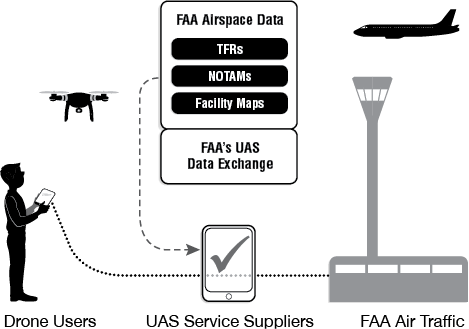
Figure 2-3. FAA’s UAS Data Exchange and the Low Altitude Authorization and Notification Capability (LAANC). (FAA UAS Data Exchange [LAANC], faa.gov/uas/programs_partnerships/data_exchange/)
Unless deemed necessary within the authorization, remote pilots are not required to contact the control tower prior to flight.
It is important to note that participation in LAANC does not eliminate the need for pilots to check NOTAMs, check weather conditions, and abide by all airspace restrictions. LAANC provides authorizations only to a specific airspace location.
Alternatively, you should use the FAADroneZone to request an airspace authorization if any of the following apply:
- You want to fly in areas that are in controlled airspace and are not covered by LAAANC (the red grids on the UAS Data Delivery System)6
- You want to fly in a “zero” grid area above airport property
- You have a waiver under Part 107 and want to fly in controlled airspace using the waiver
State, County, and Local Aviation Regulations and Legislation
Time for a Latin lesson. Do you know what the phrase ignorantia juris neminem excusat means? This roughly translates to “ignorance of the law is not an excuse.” This legal concept infers that just because you did not know there was a state or local law, ordinance, or other restriction against operating sUAS at your location does not mean you are excused of any crimes or violations. Cities, states, and counties are jumping on the regulation bandwagon and passing a variety of different types of rules, some rather strict (such as “No Drone Zones”), while others are aimed at law enforcement (e.g., no armed drones, or police need a search warrant to surveil an individual). Such restrictions are truly all over the place both in terms of the subjects of the restrictions and the locations scattered across the country. The FAA identifies three specific “No Drone Zone” areas that are in the following locations: restricted airspace, those with local restrictions, and within the boundaries of Temporary Flight Restrictions (TFRs). Some common examples of No Drone Zones include:
- National parks
- Government facilities. For example, the White House, the Pentagon, and military bases.
- Sports arenas and events
- Prisons and correctional facilities. Drones have been used to smuggle contraband into prisons, posing a security threat.
For more information about state and local rules and legislation, visit the Association for Unmanned Vehicle Systems International (AUVSI) or National Conference of State Legislatures (NCSL) websites.
What should you do if you see a “No Drone Zone” sign? A No Drone Zone sign lets you know that taking off of landing your drone from the designated area is not allowed, per local restrictions. Be aware that even if you have an airspace authorization to fly in the airspace over this area, you do not have authorization to take off or land from the property designated as a local No Drone Zone. Airspace authorization does not mean land use approval.
Just when you begin to understand the complexity of the airspace in which you may operate your system, it gets even more dizzying. If you aren’t too familiar with how jurisdiction works in terms of the federal, state, and local governments, understanding the basics will be helpful. Essentially, federal trumps all others; this is known as the “Supremacy Clause” of the US Constitution (Article VI, Clause 2). Likewise, if there is a disconnect between state and local laws, the same hierarchy often applies and the state law trumps the local laws—although this is not as absolute as at the federal level (i.e., there are exceptions). Interestingly, in 2015, the FAA released a document concerning non-federal regulations of airspace and UAS. The FAA stated that it has the authority to supersede any state or local rules, regulations, ordinances, etc.:
A consistent regulatory system for aircraft and use of airspace has the broader effect of ensuring the highest level of safety for all aviation operations. To ensure the maintenance of a safe and sound air transportation system and of navigable airspace free from inconsistent restrictions, FAA has regulatory authority over matters pertaining to aviation safety.7
The administration goes on to explicitly note how it is that it has absolute statutory authority:
Substantial air safety issues are raised when state or local governments attempt to regulate the operation or flight of aircraft. If one or two municipalities enacted ordinances regulating UAS in the navigable airspace and a significant number of municipalities followed suit, fractionalized control of the navigable airspace could result. In turn, this ‘patchwork quilt’ of differing restrictions could severely limit the flexibility of FAA in controlling the airspace and flight patterns, and ensuring safety and an efficient air traffic flow. A navigable airspace free from inconsistent state and local restrictions is essential to the maintenance of a safe and sound air transportation system.8
So what does this all mean? Technically, there are instances when state or local laws may conflict with the precedent of “unrestricted airspace” and thus would not likely stand up in court if challenged. But as you are likely aware, lawyers are very expensive to hire. So even if a local law may be subject to the Supremacy Clause, it is probably not in your best interest to test it yourself. Local law enforcement probably won’t enjoy a law lesson from someone they think is committing a crime or violating an ordinance. It is best to comply with whatever exists until it is challenged. One way to deal with the inconvenience is to contact the FAA Office of the Chief Counsel or a FAA Regional Counsel office and let them know about the restriction. Additionally, it’s not a bad idea to carbon copy the letter to your state and local representatives. We want to be good representatives of the growing sUAS market.
While only the FAA can restrict airspace, the FAA recognizes that drone safety is a partnership with local, state, tribal, and territorial government entities who have rights to regulate where drones are allowed to take off and land. This caveat does not apply to private landowners who don’t want drones flying over or near their property.
Privacy Issues
One of the biggest public concerns about sUAS relates to privacy. Many worry that drones will soon be flying all over the place, including hovering outside bedroom windows and intruding on backyard barbecues. The FAA has clearly stated that they do not regulate privacy in terms of sUAS use. However, they do advocate the adoption of voluntary privacy best practices, which can be found online.9 The key takeaways from this document are (1) use your head and (2) be a good neighbor. If you wouldn’t want someone doing what you’re doing over or near you or your house, don’t do it yourself. Also, don’t harass your neighbors, their dogs, kids, etc.
Although technically there is no regulatory height above property that one “owns,” there is a lone court case that, for now, is about the only guidance we have on this issue. In United States v. Causby, it was determined that the magic cutoff was 83 feet. (The case involved claims that military aircraft flying low over Causby’s farm made his chickens suicidal; Causby won). The FAA controls all navigable airspace, which in general refers to 500 AGL and above (49 USC §40103[b][1]). This is part of the logic behind the 400 AGL restriction on most UAS operations. An additional rule allows for the FAA to regulate certain operations below 500 AGL (49 USC §44701[a]). So for now, it is a grey area regarding who controls what, but people do not “own” as much airspace above their land as they probably think.
Again, be a good citizen. Typically neighbors can argue that you are trespassing or harassing them if you are causing them to lose the value or enjoyment of their property. Check local laws and ordinances about how these potential issues may be defined in your area of residence.
UAS Facility Maps
UAS Facility Maps (UASFMs) display the altitudes where the FAA can authorize 14 CFR Part 107 UAS operations without additional safety analysis. For more information about these maps, see Lesson 3.
Chart Supplement
The Chart Supplement refers to a series of civil/military flight information publications revised every 56 days. The Airport/Facility Directory (A/FD) is now part of the Chart Supplement (CS, or the online version referred to as the Digital Chart Supplement, d-CS).
Before setting off on an sUAS mission, you are required to become familiar with all available information regarding the flight, and the Chart Supplement is your source of information on nearby airports. Aeronautical charts show the elevation, runway length, and limited radio frequency information for an airport, but only in the Chart Supplement will you learn details about airports that may impact sUAS operations, such as the location of obstructions, powerlines in the area, or bird activity. The legend for individual airport listings is provided in Appendix B of this text. In addition to the individual airport listings, the Chart Supplement contains:
- Special notices in regard to airports listed
- FSS and National Weather Service telephone numbers
- Frequencies of Air Route Traffic Control Centers
- FAA Flight Standards office telephone numbers
- Parachute jumping areas
- Aeronautical Chart Bulletin (contains information about obstacles and hazards that have been noted since the last chart was printed and which will be included in the next printing)
- Airport diagrams for all public airports; detailed airport diagrams for large airports; airport diagrams are also available at faa.gov/airports/runway_safety/diagrams/.
An online version is available by going to faa.gov/air_traffic/flight_info/aeronav/ and clicking on “Digital Products” in the left column. The resulting page offers a number of valuable products in addition to the Chart Supplement. The Chart Supplement and its online counterpart are the only official sources of airport information. Do not rely on commercial publications.
Appendix B reprints the Airport/Facility Directory Legend from the Chart Supplement. Read it thoroughly. An amazing number of “where does it say…?” or “where can I find out?” questions can be answered by reading the Legend. This is especially true of communications questions. The ability to interpret the airport listings is only part of what you need to know.
Much of the information contained in the Chart Supplement (but not the Aeronautical Chart Bulletin) can be found at skyvector.com, airnav.com, or 1800wxbrief.com.
Advisory Circulars
The Federal Aviation Regulations are brief and concise, written by and for lawyers, not pilots. There are many situations in which a regulation or a procedure needs to be explained in detail so that the flying public can understand exactly what is required. This is the function of Advisory Circulars (ACs). ACs are non-regulatory in nature, serving only to explain the actual regulation or provide additional useful information to aid in compliance; however, the government expects every pilot to be aware of information published only in Advisory Circulars! Unfortunately, many pilots are unaware of their existence.
Advisory Circulars are numbered to correspond with the regulations. To give three examples: 14 CFR Part 61 deals with airman and flight instructor certification, while Advisory Circular 61-65 explains flight instructor duties and responsibilities; 14 CFR Part 91 is General Operating Rules, and Advisory Circular 91-74 deals with flight in icing conditions; the 70 series deals with airspace. Most pilots are only aware of those Advisory Circulars that are published in book form, such as Aviation Weather Handbook (FAA-H-8083-28) or the Airplane Flying Handbook (FAA-H-8083-3), but you should investigate whether the FAA publishes an AC on any subject you may be curious about. You can access Advisory Circulars on the faa.gov home page, although they are also available through the Government Printing Office. Guess which is more convenient?
QR Codes
If you have a smartphone, all Aeronautical Information Services products now have QR codes on their covers. For sectional charts, the QR will take you to any of these sites:
- Aeronautical Chart User’s Guide
- Chart Supplement
- NOTAMs and TFRs
- Safety alerts
- VFR chart update bulletins
- VFR Class B enhancement graphics
- Weather cameras
The QR code on the Chart Supplement will take you to:
- Aeronautical Chart User’s Guide
- Digital Chart Supplement
- NOTAMs and TFRs
- Safety alerts
- Weather cameras
The QR codes provide the opportunity to get the absolute latest information available.
Notices to Airmen (NOTAMs)
Information that might affect the safety of a flight—such as an airport closure, Temporary Flight Restriction (TFR), communication frequency change, etc.—is available from your Flight Service Station (FSS) briefer.
Your briefer has access to NOTAMs. If you use one of the computer flight planning products such as the AOPA flight planner or 1800wxbrief.com, you will also receive current NOTAMS—but be aware that TFRs can pop up without warning. Always check for them with flight service before takeoff to avoid being greeted by law enforcement or even the military.
To make it easier for pilots to scan through a list of NOTAMs for information specific to their flight, the FAA uses keywords in the first line of text. (See Figure 2-4.)
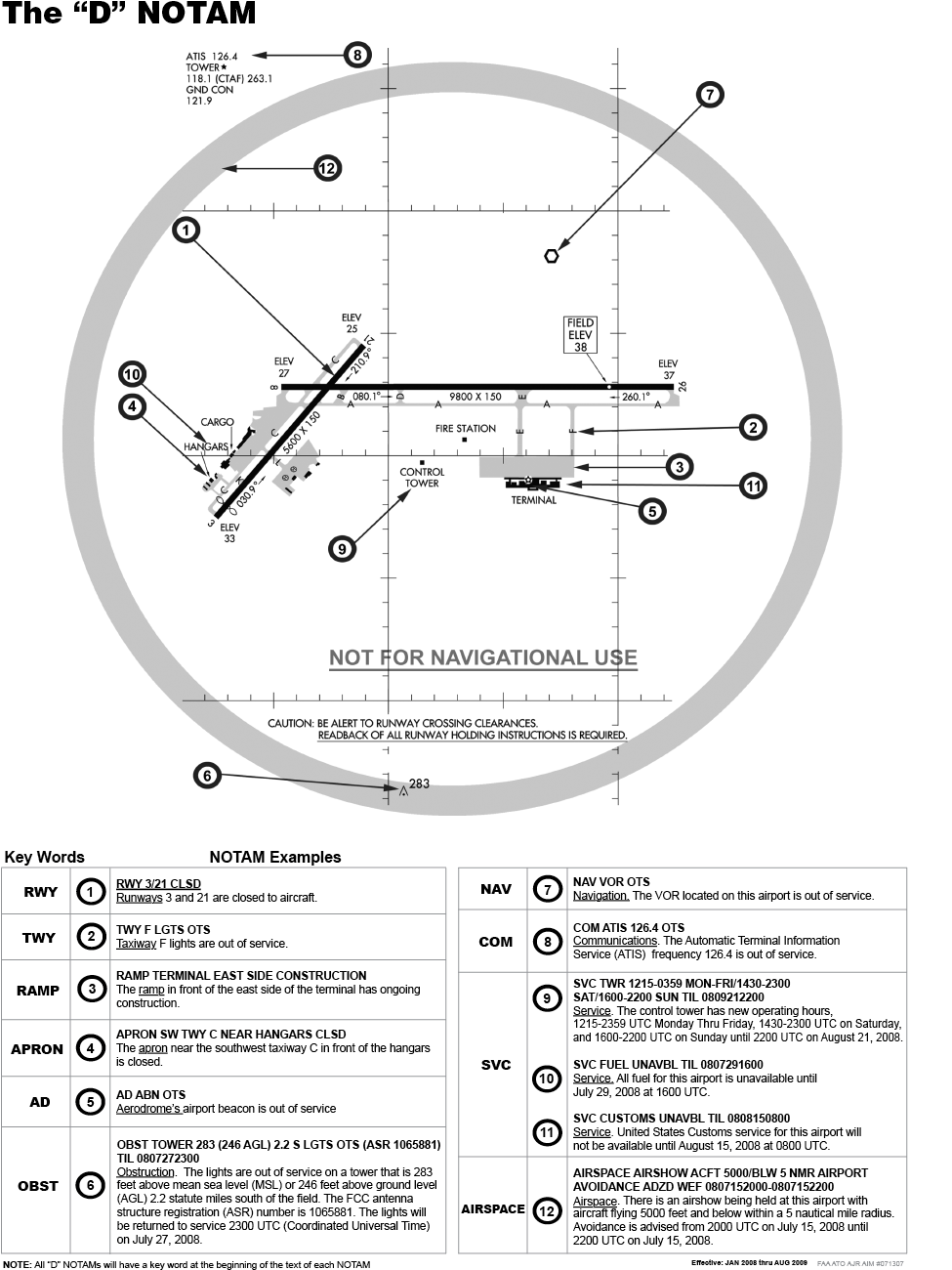
Figure 2-4. Example of FAA NOTAM “key words” (see AIM Table 5-1-1 for more keywords and definitions).
Aviation Media
All pilots are expected to stay abreast of changes in regulations and procedures, but advancing technology is teaching new ways of navigating and of solving some of the mysteries of weather, and pilots cannot expect today’s methods to apply forever. It is a good idea to pay attention to any newly proposed regulations. You can see what may be implemented in the near future at the FAA’s Notice of Proposed Rulemaking (NPRM) website. You can even subscribe for email updates at faa.gov/regulations_policies/rulemaking/recently_published/. The aviation press is the best source of information on the changing world of flight, and we recommend that you read aviation newspapers and magazines. The FAA’s Aviation Safety Briefing, published six times a year, is available from the FAA home page, and you will find a wealth of information on the Academy of Model Aeronautics (AMA) website, modelaircraft.org. Another good resource for changes in sUAS regulations or other pertinent data can be found by becoming a member of the Association for Unmanned Vehicle Systems International (AUVSI), although non-members can still view recent events and some news features. Visit auvsi.org for more information. As with everything in aviation, remember the FAA is the official source of regulations, policies, and requirements.
Review Questions
1. In which publication can pilots find information about air traffic control procedures?
A—Air Traffic Control Trainee Handbook
B—Pilot’s Handbook of Aeronautical Knowledge
C—Aeronautical Information Manual
2. The rules governing the recreational use of drones can be found in
A—14 CFR Part 91
B—49 USC §44809
C—14 CFR Part 101
3. The part of 14 CFR that covers non-recreational use of sUAS is
A—Part 91
B—Part 101
C—Part 107
4. Without proper notification of the airport operator and air traffic control (if applicable), a recreational sUAS operator cannot fly within ____ miles of an airport.
A—3
B—5
C—recreational pilots are not required to maintain separation from airports
5. You experience a fly-away during which your sUAS crashes through a storefront window, causing $800 in damages. By when must you report this accident to the FAA?
A—immediately
B—within 3 calendar days
C—within 10 calendar days
6. You experience a fly-away during which your sUAS crashes into a person, knocking them unconscious. They are transported to the hospital for care. Who must you report this event to?
A—No report is required.
B—Only the FAA.
C—Both the FAA and the NTSB.
7. You experience a fly-away during which your sUAS hits a house, causing $500 in damage to the garage door. Additionally, your sUAS, valued at $1,200 is destroyed. By when must you report this accident to the FAA?
A—No report is required.
B—Within 3 calendar days.
C—Within 10 calendar days.
8. Which of the following operations is not covered by 14 CFR Part 107?
A—Flying an sUAS to take pictures of a house for personal use.
B—Flying an sUAS to take pictures of a house for business use.
C—Flying an sUAS to survey a farm to provide precision agricultural services.
9. Which of the following UAS do not need to be registered with the FAA?
A—Model aircraft used recreationally weighing 3 pounds.
B—sUAS used recreationally weighing 0.50 pounds.
C—sUAS used for business weighing 5 pounds.
10. How is a remote pilot medically certified to be authorized to fly sUAS under 14 CFR Part 107?
A—The remote pilot is responsible for determining fitness to fly.
B—The remote pilot must receive a physical from a FAA medical examiner.
C—The remote pilot must receive a physical from their primary care physician.
11. Which of the following is not true regarding the responsibilities of the remote pilot-in-command during an emergency?
A—The remote PIC may disregard any regulation if such deviation is required to respond to the emergency.
B—The remote PIC may disregard any regulation regardless of circumstances.
C—The remote PIC must send a report to the Administrator, if requested.
12. Which of the following would not be covered by 14 CFR Part 107?
A—Flying your sUAS for hobby purposes.
B—Flying your sUAS for business purposes.
C—Flying your sUAS in exchange for a gift.
13. What length of time must a visual observer wait between having an alcoholic drink and helping with an sUAS mission?
A—None; the remote pilot-in-command is the only person subject to restrictions.
B—Eight hours.
C—Four hours.
14. If you are convicted of any offenses related to alcohol or drugs, what may the FAA do to you as a remote pilot?
A—Revoke your certificate.
B—Revoke your certificate and deny application for a certificate for up to one year.
C—The FAA does not have jurisdiction over local violations; therefore, they cannot take any action.
15. Which of the following fulfills the requirement for maintaining visual line-of-sight?
A—The visual observer uses binoculars to monitor the status of the sUAS.
B—The remote pilot-in-command uses binoculars to monitor the status of the sUAS.
C—The remote pilot-in-command uses corrective lenses to monitor the status of the sUAS.
16. You wish to fly your sUAS during civil twilight. What special authorization is required?
A—No special authorization is needed if the aircraft if fitted with the proper lighting system.
B—No special authorization is needed, since twilight is considered daytime.
C—Such operations are prohibited, unless you have a waiver, as twilight is considered nighttime.
17. While you are flying a mission with your sUAS, you notice a crewed aircraft approaching. How do you determine who has the right of way?
A—The lowest aircraft has the right of way.
B—Crewed aircraft generally have the right of way.
C—Since the crewed aircraft is approaching from the left, it must give way to you.
18. A friend asks you to help video-record their wedding from an aerial perspective. Which of the following would you be able to provide to remain in compliance with regulatory restrictions?
A—Imagery shot from an area to the side of the guests.
B—Imagery from directly above the guests, but high enough to be able to maneuver to safety in an emergency.
C—Any video recording is legal as long as the sUAS remains in VLOS.
19. You are planning to photograph some real estate just outside the property line of a local airport that has a control tower. What action must be taken by the remote pilot-in-command prior to sUAS operations in the area?
A—No action is required, as Part 107 does not specify a distance sUAS must remain away from airports.
B—The sUAS must remain clear of all traffic patterns and operations at the airport.
C—The remote pilot-in-command must receive authorization to conduct operations in the area.
20. You are planning to photograph some real estate just outside the property line of a remote, non-towered airport. What action must be taken by the remote pilot-in-command prior to sUAS operations in the area?
A—No action is required, as Part 107 does not specify a distance sUAS must remain away from airports.
B—The sUAS must remain clear of all traffic patterns and operations at the airport.
C—The remote pilot-in-command must receive authorization to conduct operations in the area.
21. A Notice to Airmen (NOTAM) has been issued stating that flight operations are prohibited within 5 NM of a local football stadium. What precautions should you take when operating in the area?
A—As a courtesy, you should avoid flying near or over the area.
B—No precaution is required, as NOTAMs apply only to crewed aircraft.
C—Avoid the area, as sUAS operations are not permitted in the area.
22. The local news channel is reporting foggy conditions in the area. What is the minimum visibility required to permit non-recreational sUAS operations?
A—3 SM
B—3 NM
C—5 NM
23. In order to act as remote pilot-in-command, you must be at least ____ years old.
A—15
B—16
C—18
24. For persons not certificated as a pilot (other than student pilot) under 14 CFR Part 61, which of the following is not a requirement to receive a remote pilot-in-command?
A—Take the FAA Knowledge Test.
B—Be able to read, speak, and understand English.
C—Hold a FAA medical certificate.
25. In order to act as remote pilot-in-command, you must have completed recurrent training or retake the UAG FAA Written Test every
A—12 months.
B—24 months.
C—Not applicable; currency never expires.
26. How long do you have to notify the FAA of any change in your name or address?
A—14 days
B—30 days
C—120 days
27. If you discover that the city in which you are planning to fly has an ordinance against the operation of sUAS within its borders, which is the best option for your mission?
A—Cancel the mission.
B—Notify local law enforcement and carry out the mission as planned.
C—Federal law supersedes local law; therefore, you can fly without restriction or prior notification.
28. Where can you find phone numbers of FAA Flight Standards offices?
A—On aviation maps.
B—You cannot; they are not published for security purposes.
C—Within the Chart Supplement.
29. What is the best source of NOTAMs for remote pilots?
A—Employees at a nearby control tower.
B—Flight Service Station briefers.
C—Local law enforcement officials.
30. How long do you have to wait after failing the FAA Written Test before taking it again?
A—7 days
B—14 days
C—30 days
31. Authorization to operate in airspace via LAANC precludes the requirement to contact the local air traffic control tower.
A—True
B—False
32. What is TRUST?
A—A means for recreational fliers to show Homeland Security they are legitimate pilots
B—A means for recreational fliers to gain their Part 107 certificate
C—A means for recreational fliers to prove they have passed an aeronautical an safety test to the FAA or law enforcement
33. Which of the following locations can be assumed to be “No Drone Zones”
A—Prisons
B—Military bases
C—National Parks
D—City Parks
34. What is the purpose of a UAS Facility Map?
A—to show altitudes where the FAA can authorize part 107 UAS operations without additional safety analysis.
B—to show altitudes where Part 107 UAS operations without any action.
C—to show the recommended operational altitudes for recreational UAS operations.
Answers:
1-C, 2-B, 3-C, 4-B, 5-C, 6-C, 7-A, 8-A, 9-B, 10-A, 11-B, 12-A, 13-B, 14-B, 15-C, 16-A, 17-B, 18-A, 19-C, 20-B, 21-C, 22-A, 23-B, 24-C, 25-B, 26-B, 27-A, 28-C, 29-B, 30-B , 31-A, 32-C, 33-A B C, 34-A.